A common response to the original was: ‘OK, what about outsourced emissions?’
Several readers asked how the picture changes once emissions embedded in trade are reassigned to consuming nations rather than producing ones. You can see the original production-based emissions version here.
Consumption-based accounting reallocates emissions according to where goods and services are ultimately consumed, rather than where they are produced. In practice, this means subtracting emissions embedded in exports and adding emissions embedded in imports.
The picture shifts, though less dramatically than one might expect.
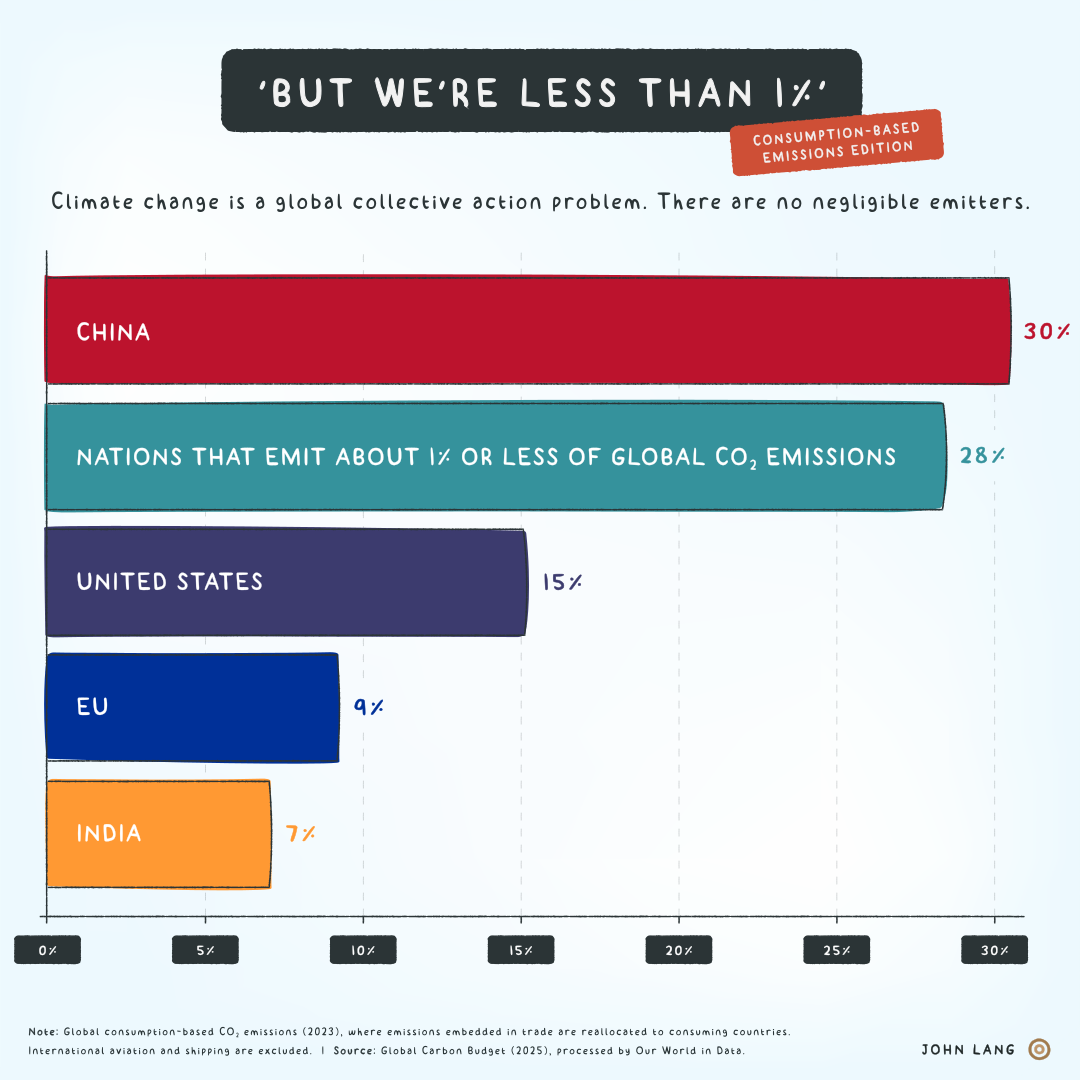
China's share actually increases slightly in this version – something that may seem counterintuitive given its reputation as the 'factory of the world'. But while China exports enormous volumes of manufactured goods, it is also a vast consumer economy in its own right, with a huge domestic market and rapidly rising consumption. Its emissions are not simply 'the West’s emissions outsourced'. China is, fundamentally, just an enormous emitter of CO2 in absolute terms.
The US and the EU also capture a larger share under consumption-based accounting because they import a large volume of manufactured goods and the emissions embedded within them. Standard production-based accounting often understates the climate impact of high-income consumer economies.
India, by contrast, moves down a fraction, indicating a smaller role for imported consumption and a greater share of emissions tied to domestic development and industrialisation.
Production-based accounting tells us where emissions physically occur. Consumption-based accounting tells us where demand ultimately sits. Both perspectives are important, alongside historical cumulative emissions and per capita emissions. These metrics provide a more complete picture of the drivers of global emissions, and the questions of responsibility and fairness they imply.
Taken together, production-based and consumption-based accounting reinforce a broader point. Human-caused climate change is a global collective action problem, with no truly negligible emitters.