‘But what about China?’ is a fair question. China is simultaneously the world’s largest emitter and the world’s leading ‘electrostate’.
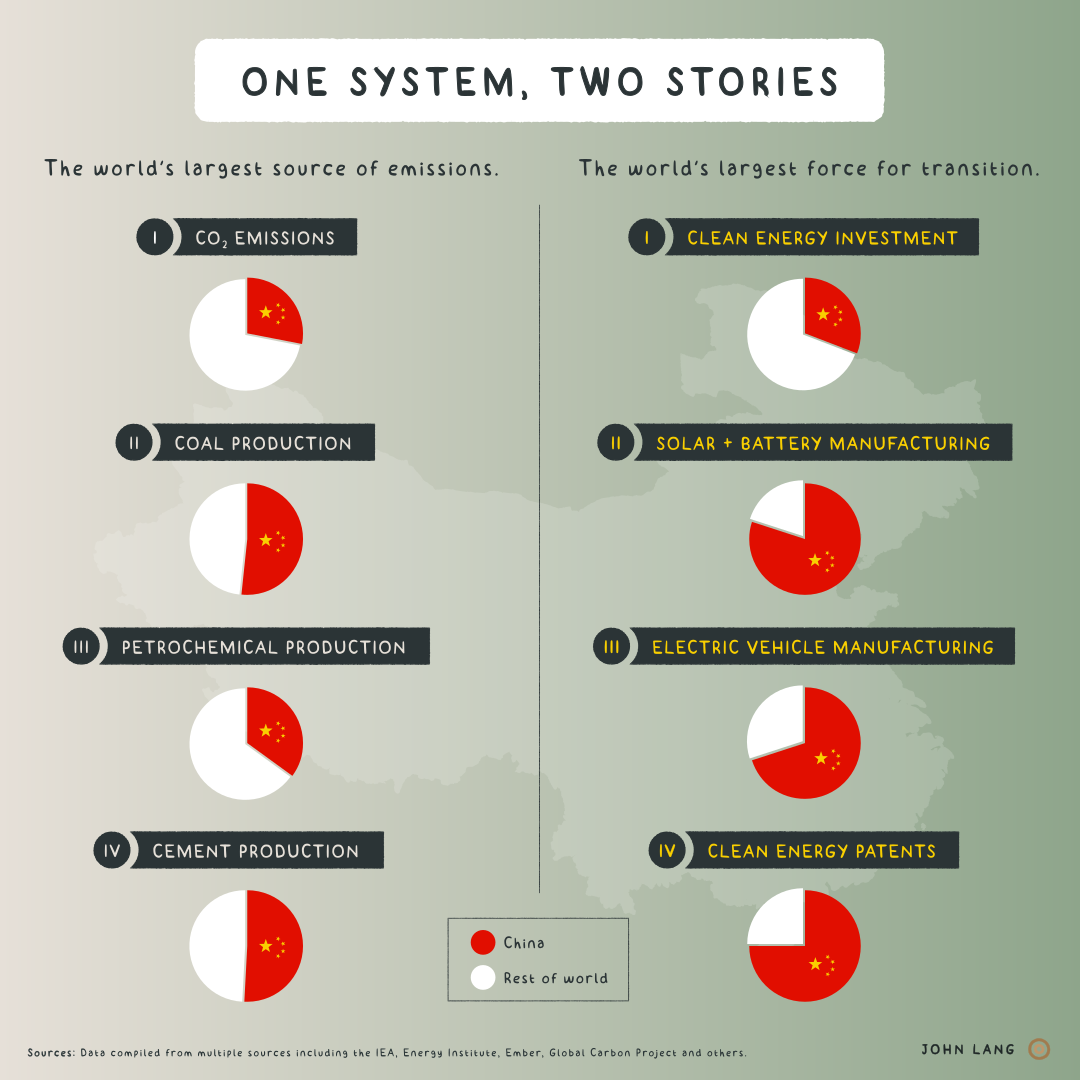
China sits at the centre of the climate and energy story because it embodies two eras. It’s by far the world’s largest source of annual CO2 emissions, with an economy still deeply anchored in coal-fired power, heavy industry and cement production – all legacies of decades of breakneck industrialisation.
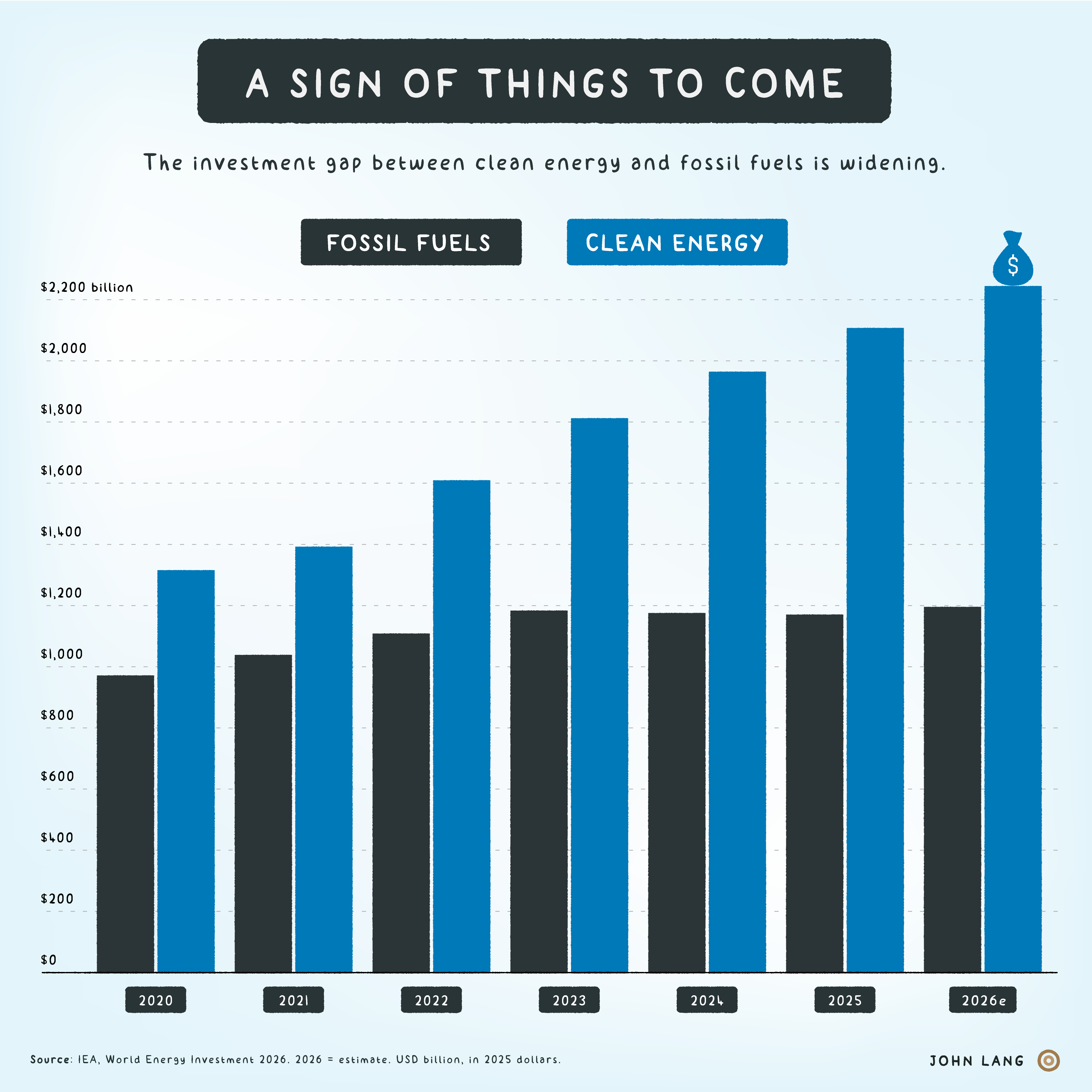
Yet China is also reconfiguring the global energy system faster than any country in history. It’s the world’s largest investor in clean energy and the dominant manufacturer of the ‘new three’: solar panels, batteries and EVs. Clean energy industries now account for more than 10% of GDP. Over half of all cars sold in China are now electric; one in every four heavy vehicles being sold is too. And let this sink in: Chinese firms file around three-quarters of global clean-energy patent applications. China is becoming both the factory and the laboratory of the energy transition.
China embodies the contradiction of the energy transition and the paradox of progress: clean energy is scaling at warp speed even as the fossil-fuelled system stays stubbornly vast. The transition, partial and imperfect though it is, is starting to become visible.
China’s emissions have now been ‘flat or falling’ for about two years, with power-sector emissions declining as surging wind, solar and battery storage increasingly outpace growth in electricity demand – the key to squeezing fossil fuels out over time. In 2025 alone, China added around half of all new wind and solar capacity globally, while solar generation climbed by a staggering 43%.
Still, the picture is messy and nuanced, and will stay that way for the foreseeable future. China’s new five-year plan backs clean tech, electrification and energy security at massive scale, while continuing to support the ‘clean and efficient’ use of coal. Emissions from petrochemicals and coal-to-chemicals continue to rise, and the pipeline for new coal is eye-wateringly large. Whether China’s at peak carbon before decline – or merely entering a long plateau – is debated by analysts. But given how fast China is electrifying, at some point soon, the giant red block will start shrinking.
What happens in China doesn’t stay in China.
Meanwhile, its vast clean-energy investment and manufacturing base is lowering technology costs and accelerating electrification elsewhere, especially in emerging economies, where it’s exporting ‘surplus’ clean tech. Chinese clean energy exports in 2024 alone are projected to reduce emissions outside China by around 1%.
For China, the push into clean tech is about much more than tackling climate or air pollution. It’s primarily about energy security, trade, competitiveness and strategic autonomy. The superpowers are in a race to dominate the industries that will power the future economy, even though some leaders still seem more interested in reviving the industries of the past. China’s leaders saw where things were heading decades ago and planned accordingly.
How fast China moves from coal to clean electricity and from fossil-fuelled industry to electrification will dictate the speed of the global transition. It’s complicated, but China is moving at a pace and scale never seen before – helped by the ineluctable economics of clean energy, where technologies improve and costs fall with scale.
‘But what about China?’ cuts both ways.