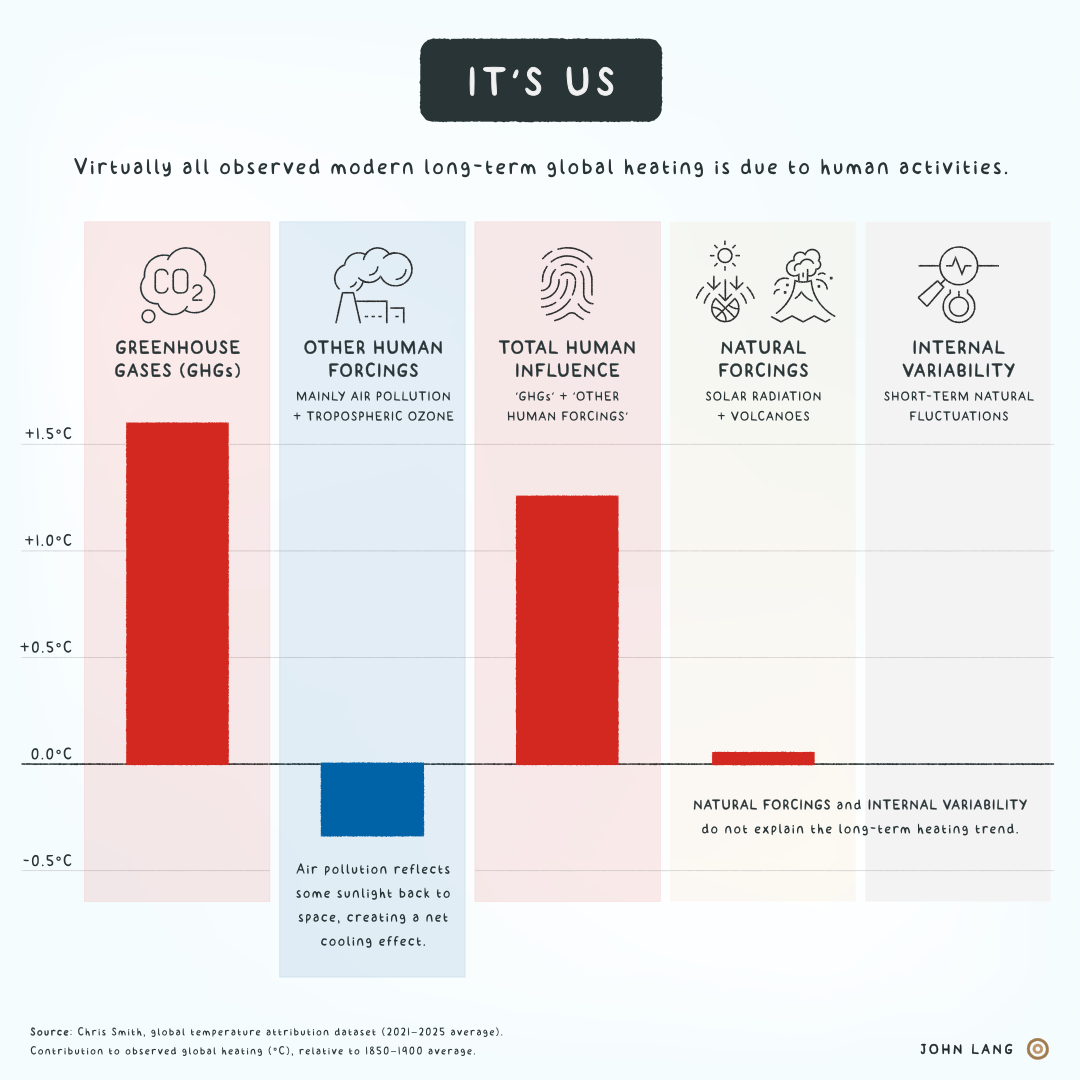
The best estimate of the human contribution to modern global heating is around 100%, and possibly more than 100%.
Radiative forcings describe the factors that alter Earth’s energy balance – the difference between energy entering the climate system and heat escaping back to space. Positive forcings drive heating; negative forcings drive cooling.
Since the industrial era began, radiative changes on Earth have been dominated by human activities. Science now shows clearly that human activities are the dominant driver of the heating observed since the mid-20th century. That's because CO2 and other greenhouse gases (GHGs) create a strong positive forcing by trapping outgoing heat. In effect, we are adding an extra blanket around our planet.
‘It is unequivocal that human influence has warmed the atmosphere, ocean and land’ — IPCC 2021
CO2 levels are now likely higher than at any time in at least the past two million years, and rising every year. The last time atmospheric CO2 levels were this high was roughly three million years ago, during the Mid-Pliocene Warm Period, when global surface temperature was 2.5-4°C hotter than during the pre-industrial era.
On their own, these gases would have produced more heating than has actually been observed. That apparent paradox is explained by air pollution particles, known as 'aerosols' by scientists. Human-produced sulphur dioxide and other pollutants reflect sunlight and alter cloud formation, creating a cooling influence, partly offset by warming from tropospheric ozone. (Adding up all these effects is a complex task.)
So, burning fossil fuels has both heated the planet and partially masked that heating influence. As we clean up our cities and air pollution declines, this temporary cooling effect will fade, revealing more of the underlying heating from our GHG emissions.
Natural forcings tell a different story.
Solar activity over the past century has not been unusual in the context of the past several thousand years. Volcanic eruptions cause short-lived cooling lasting a few years, but no sustained, long-term heating trend. Taken together, over the past half century, natural forcings have had little to no net effect on long-term global temperatures, and may even have exerted a slight cooling influence.
This is why science shows that human activities account for effectively all of the observed long-term global heating – and perhaps slightly more over the last 50 years. The ‘more than 100%’ reflects the fact that, all things being equal, natural forcings likely exerted a small cooling influence over the last half century, acting in the opposite direction to human-driven heating. Without that natural counter-effect, temperatures would likely be higher still.
The long-term heating trend we observe is therefore entirely human-caused.