In 2008, the UK pioneered a new model of climate governance by legally embedding long-term targets, carbon budgets and oversight from an independent climate body.
That model has since gone global. Today, almost 70 nations have adopted framework climate laws, while the number of national climate bodies has more than tripled since 2015, from 8 to 30. Variants of the UK model now underpin climate governance from New Zealand and Colombia to the European Union's Climate Law.
Climate change is a ‘long problem’ that plays out over decades. Political attention in Western democracies can be counted in weeks, years if we’re lucky, or news cycles if we're not. Framework climate laws help transcend politics by creating durable institutions, long-term planning horizons and policy certainty beyond sitting governments.
Investors and firms do not know exactly how the net zero transition will play out, but they gain confidence that the overall direction of travel is unlikely to change. Bryony Worthington – one of the principal architects of the UK's Climate Change Act 2008 – argues that the UK's version is 'the closest thing we’ve got to a settled industrial policy that propels the UK into a more productive, more secure, cleaner future. Capital that builds things hates uncertainty and the Act gives it a steady hand.'
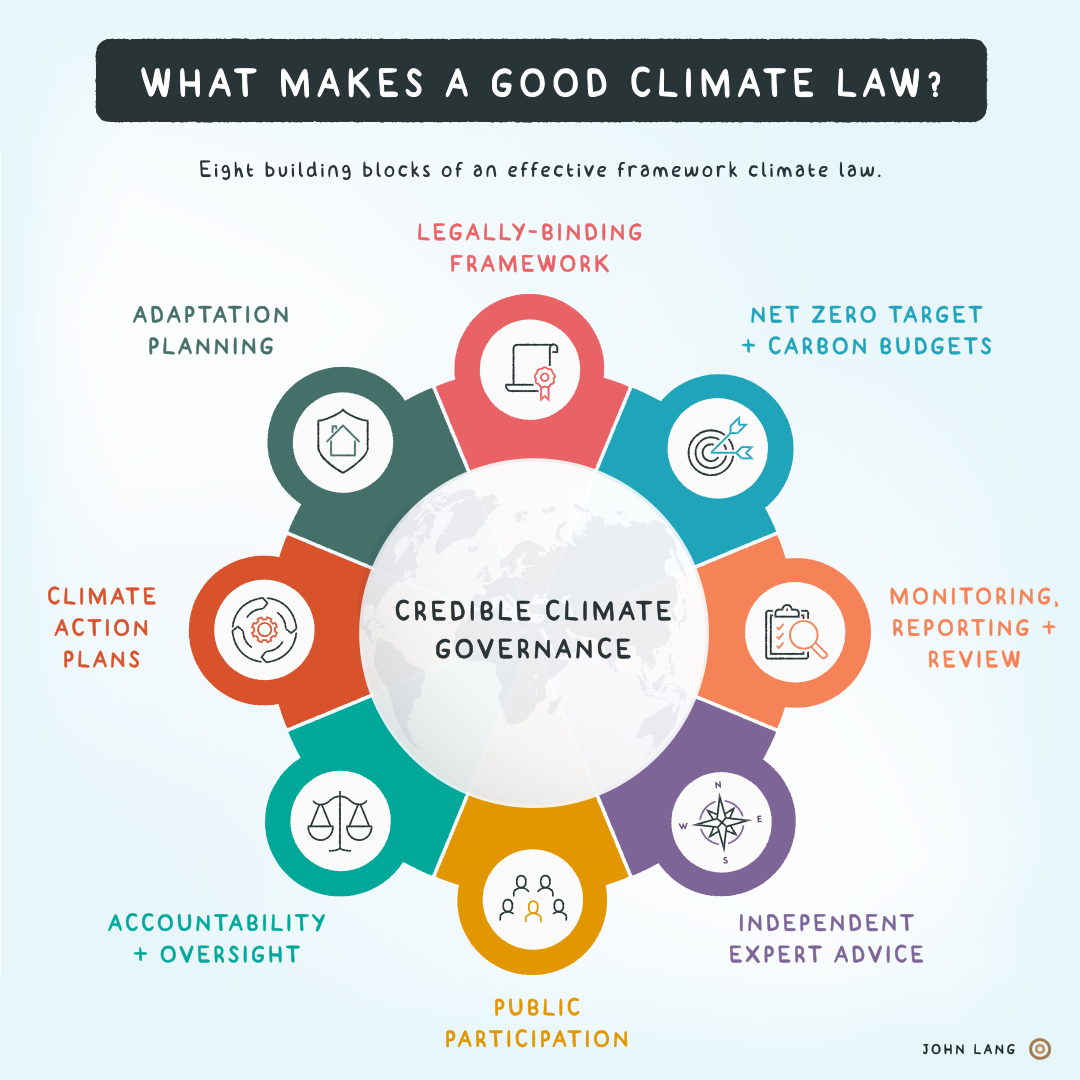
A strong climate law starts with a legally-binding framework, backed by a net zero target and carbon budgets that translate long-term ambition into near-term milestones and help bridge political cycles. It requires robust monitoring, reporting and review, supported by independent expert advice that keeps decisions grounded in evidence, not politics. It should enable meaningful public participation, provide mechanisms for accountability and oversight, require detailed climate action plans, and ensure governments prepare for unavoidable impacts through adaptation planning.
Stubborn with the destination, flexible with the details
Carbon budgets can be mistaken for fixed prescriptions. More like guide rails, carbon budgets provide long-term certainty while allowing policymakers flexibility to adjust course as technologies improve and circumstances change. The UK’s Seventh Carbon Budget, covering 2038–2042, was proposed in June 2026 – a full 12 years before it would take effect. The procedural requirements baked into UK carbon budgets act like ‘legal metronomes’ for sitting governments, creating a regular rhythm of planning regardless of who holds office. Countries like New Zealand, Denmark, Finland, Germany, Ireland, Colombia and Portugal have adapted this model to their own circumstances while retaining the same core ingredients of credible climate governance.
Climate governance has come of age since the Paris Agreement. More than 85% of tracked national climate policy tools were introduced after 2015. Nineteen G20 countries now have mandatory greenhouse gas disclosure requirements, while 16 require disclosure of physical and/or transition climate risks. More than 5,000 climate-related laws and policies now exist worldwide, up from around 1,200 in 2015.
The most effective framework climate laws do not prescribe decisions in advance. Instead, they create the confidence and continuity needed for societies to plan for a cleaner, less volatile future.
Human-caused climate change is a wickedly long problem. Durable progress depends on building institutions capable of taking a long-term view.