Without human influence, the recent European heatwave would have been more than 3°C cooler.
Weather determines when heatwaves happen. Human-caused climate change amplifies them. Across much of western Europe and the UK, temperatures reached 5 to 12°C above June averages, driven by a so-called 'omega block' which sustained a persistent area of high pressure, bringing hot air from the south-east and clear skies.
The backdrop is a world that is already about 1.3°C hotter and is heating at roughly 0.3°C per decade. The three hottest years on record were the last three, with 2024 becoming the first calendar year to pass 1.5°C above pre-industrial (1850-1900) temperatures.
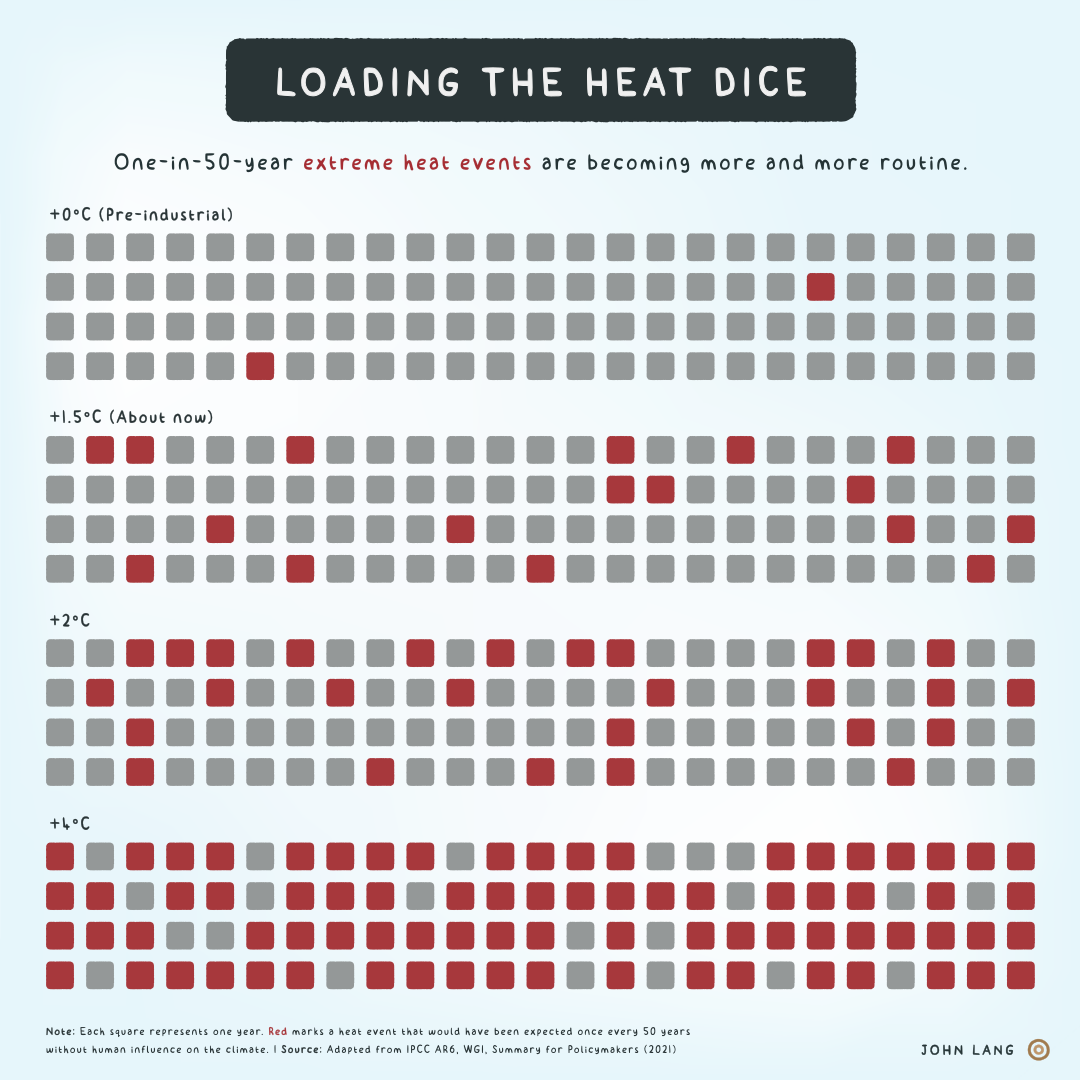
Heat events expected about once every 50 years in a pre-industrial climate become more common as the world heats up. Climate scientist James Hansen famously described this as ‘loading the dice’. The weather rolls the dice, but climate change loads them with more sixes than they would otherwise have.
The visual above illustrates the shifting probability. Each square represents one year; each block, 100 years. Red squares show the likely years experiencing an extreme heat event that would have been expected only once every 50 years in a pre-industrial climate.
The numbers
- 2x – Europe is heating twice as fast as the global average: +0.56°C per decade
- 3x – Europe's hottest daytime temperatures are increasing at around three times the rate of global heating.
- 2x – Land is heating about twice as quickly as the ocean.
- About 2,800 billion – Tonnes of CO2 humanity has emitted since pre-industrial times, trapping more heat in the atmosphere.
World Weather Attribution recently compared this June’s heatwave with 1976, one of Europe's benchmark heatwaves and a year when several long-standing June records were set. It found that temperatures like those observed would have been virtually impossible then, and that a similar event would have been around 3.5°C cooler during the day.
During the 2026 heatwave, about 45% of 854 European cities broke heat stress records. Heat already causes more deaths in Europe than all other natural hazards combined. It’s estimated that about 60,000 people died during the extreme summer of 2022, and about 50,000 died from heat-related causes in the summer that followed.
Why it matters
If relatively wealthy Europe is already straining under extreme heat, the challenge for many lower-income countries is starker. As temperatures continue to rise, the largest populations exposed are projected to be in India, Nigeria, Indonesia, Bangladesh, Pakistan and the Philippines. One Oxford study estimates that, under a middle-of-the-road emissions pathway, the share of the world's population experiencing extreme heat could increase from 23% in 2010 to 41% by 2050.
Heat impacts are typically non-linear: a few extra degrees can mean much larger increases in mortality, crop losses and wildfire risk. Schools, hospitals, trains and power grids were designed for yesterday's climate, not today's or tomorrow's.
Every additional fraction of a degree loads the dice further. We have to adapt to the heat already locked in and limit future heating through rapidly phasing out fossil fuels and reaching net zero to reduce the risk of even more severe heat extremes.