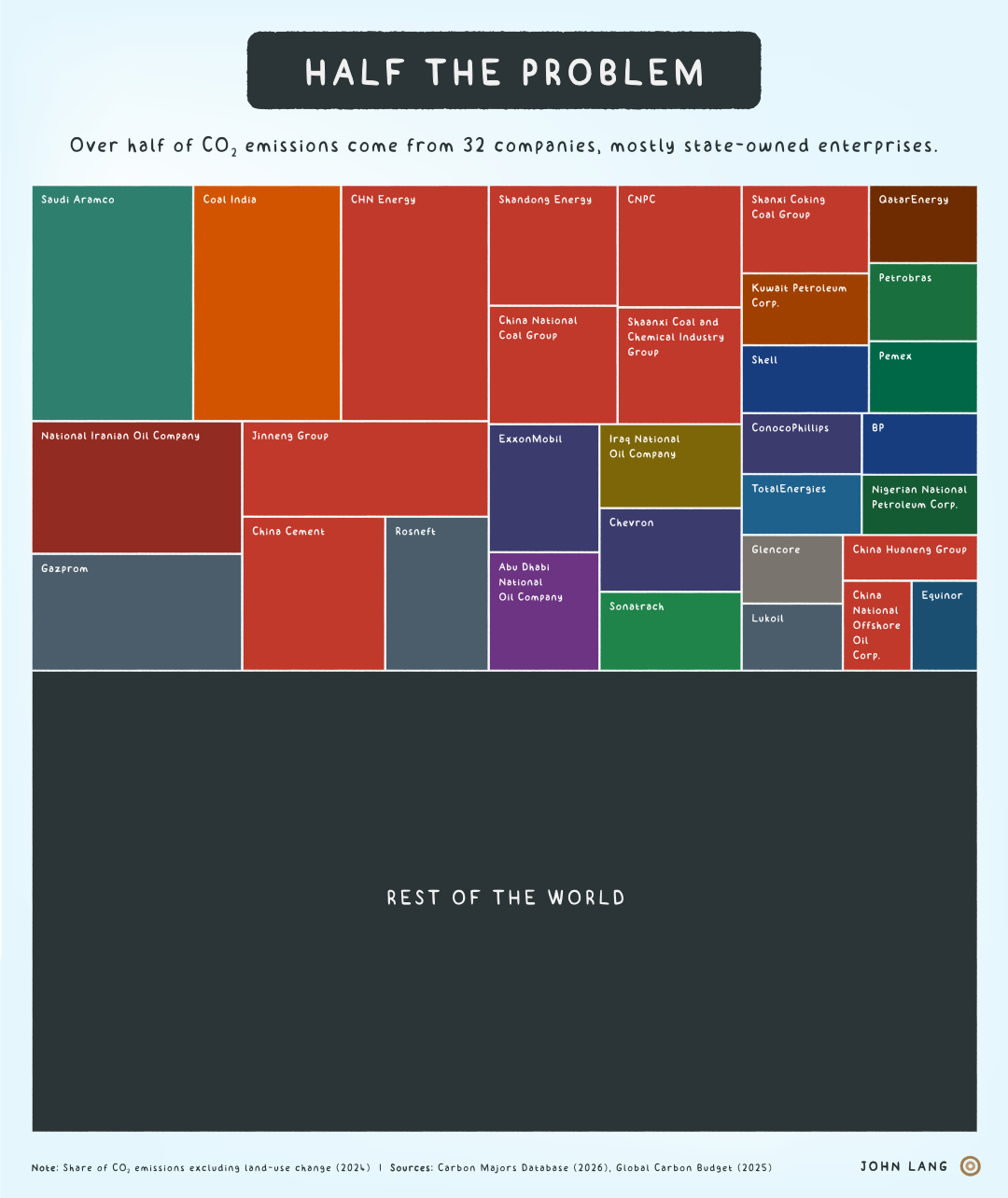
Half of annual CO2 emissions can be traced to just 32 firms.
Most are state-owned enterprises. Saudi Aramco alone is linked to over 4% of the total, while China’s red giants dominate the picture. The investor-owned companies we all know – Chevron, Exxon, BP and Shell – are there if you squint. Expand the timeframe to total historical emissions and their shares grow much larger.
Invisible obligations
CO2's genius stroke is that we can't see it. Imagine if every tonne of CO2 released from burning fossil fuels appeared as a bright pink plume of waste. The idea that trillions of tonnes could simply be dumped into the great aerial ocean above us indefinitely – at no cost to the producer – would be unconscionable. Society wouldn’t tolerate it.
In most industries, dealing with waste is part and parcel of doing business. Sewage is treated. Your rubbish is collected. Hazardous waste has to be disposed of safely. Producers of cars, electronics, packaging and batteries are often required to help clean up at the end of their useful lives.
Oxford physicist Myles Allen and colleagues argue this principle of 'extended producer responsibility' should be applied to fossil fuels through a Carbon Takeback Obligation (CTBO). Under a CTBO, fossil-fuel producers would take responsibility for permanently storing the CO2 associated with the fuels they sell – making carbon clean-up part of the cost of fossil-fuel production.
The world's climate goals could be achieved at an affordable cost if fossil-fuel producers paid for clean-up. The industry can't claim it doesn't have the means. Fossil fuels built the modern world. They powered industrialisation, raised living standards and brought abundant energy to billions. But dealing with their waste – more than 100 million tonnes of CO2 every day – should be part of the bargain.
'We've got to stop fossil fuels causing global heating before the world stops burning fossil fuels.' — Myles Allen
Net zero together, or not at all
The above visual isn’t a ledger of blame. Nor is the ‘Rest of the World’ off the hook. Agriculture, transport, industry and other sectors consume fossil fuels and produce other greenhouse gases. This visual merely shows where emissions can ultimately be traced, not the messy web of decisions, demand, money and policy that prolongs the flow and delays the date of net zero.
What levers, then, can the rest of the world pull? Governments can accelerate clean energy, build out grids and infrastructure, reform fossil-fuel subsidies, put an effective price on carbon – and, one day, require producers to take back their carbon. Investors decide what gets financed where. Individuals influence demand, social norms and – in most liberal democracies – decision makers. Companies determine what gets made, bought and sold.
Corporate spheres of influence
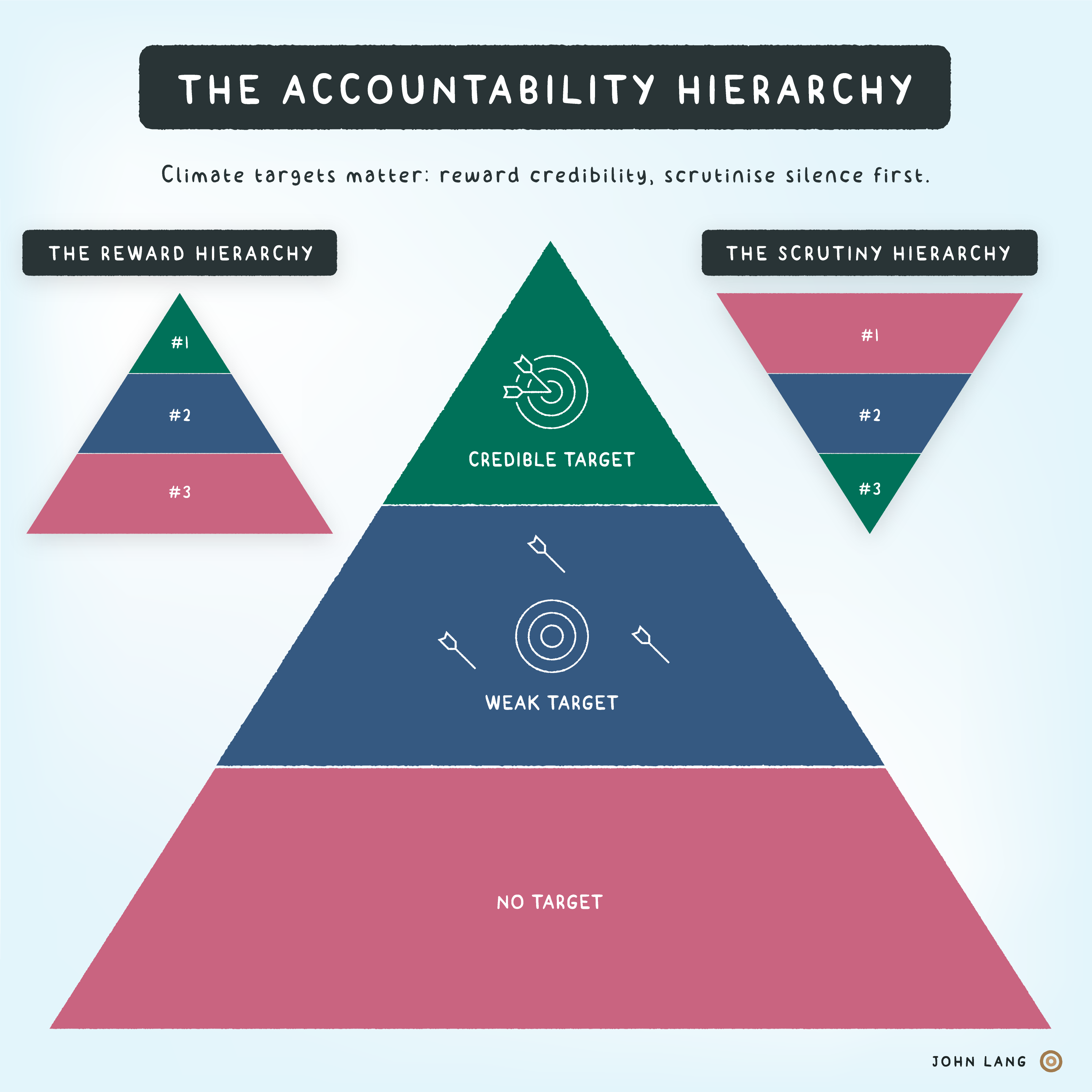
Many of the carbon majors sit beyond the reach of today's voluntary corporate climate frameworks. State ownership can insulate them from conventional investor pressure and public scrutiny, making it tricky to reach them directly.
But these majors can and will be influenced indirectly as demand, markets, technologies, norms and investment conditions change around them over time.
Every company has two climate responsibilities: its carbon footprint and its sphere of influence. One should shrink; the other can grow. In broad terms, that influence spans products, portfolios and policy – what customers buy, where capital goes and what governments regulate. New climate standards – including the Science Based Target initiative's latest iteration and the incoming ISO Net Zero Standard – are finally recognising the importance of companies’ wider sphere of influence.
Responsibility
There’s another route to accountability, still relatively underused. Research shows that only 6% of climate court cases have been filed against the 78 largest fossil-fuel majors, jointly responsible for more than 70% of historical CO2 emissions. Cases have, however, been ramping up steadily since the 2015 Paris Agreement.
Responsibility for emissions has a long memory. Run the clock further back to all the years before 2024 and investor-owned oil majors such as Chevron, ExxonMobil, BP and Shell leap up the table. That's because of the massive share of cumulative emissions associated with the fossil fuels they’ve produced over a century or more.
That history matters for fairness: who profited most, who contributed most and who should bear most of the costs of cleaning it up.
Next week's visual will explore these questions.