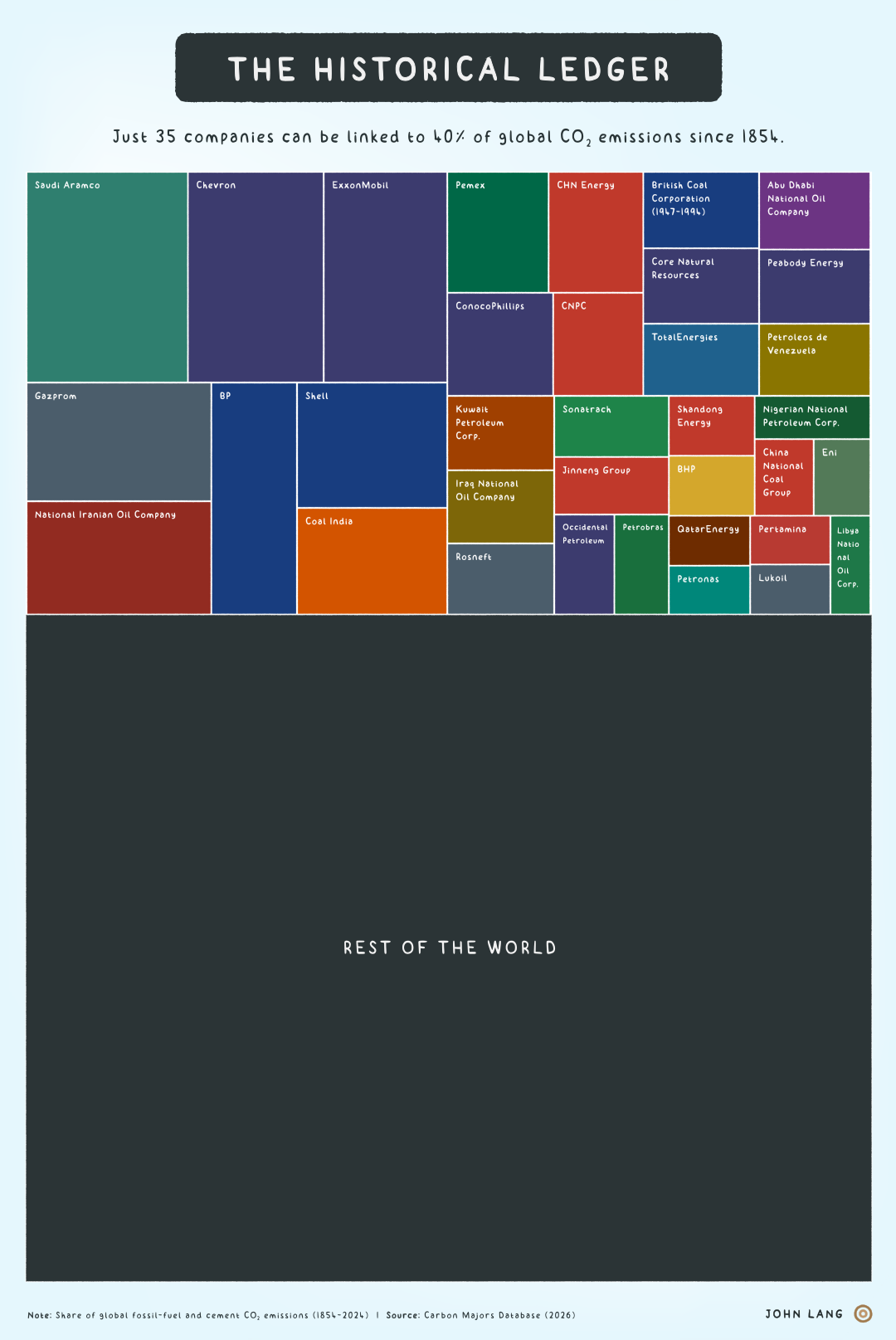
CO2 emissions accumulate in the atmosphere over time. Today’s heating reflects the human-added stock that has built up over generations – about 1.3 trillion tonnes.
Last week's visual illustrated the annual picture: 32 companies linked to over half of global CO2 emissions in 2024. If you wind the clock back 170 years and add up emissions from the start of the fossil-fuel era, the picture changes.
Saudi Aramco retains top spot. Chevron jumps to second place (from 16th). ExxonMobil rises to third (from 13th). Shell and BP become two of the largest blocks on the page, up from 20th and 26th, respectively. Meanwhile, British Coal Corporation (1947–1994) and US coal producer Core Natural Resources enter the ledger's upper reaches. Many of China’s state-owned giants, by contrast, fall down the pecking order.
The three largest state-owned carbon majors are Saudi Aramco (3.66%), Gazprom (2.33%) and the National Iranian Oil Company (2.25%). The investor-owned leaders are Chevron (3.08%), ExxonMobil (2.79%) and BP (2.13%).
Like last week, this is an emissions ledger, not a verdict on blame. The ‘Rest of the World’ is not off the hook. Agriculture, transport, industry and other sectors consume fossil fuels and produce other greenhouse gases. This visual, like the annual version, merely shows where emissions can ultimately be traced, not the messy web of decisions, demand, money and policy that prolongs the fossil flow.
Why 40%, not 50%?
This visual stops at 35 firms, responsible for just over 40% of historical CO2 emissions. That's mainly a design choice: hitting 50% would require squeezing 81 companies into the top half. Too hard basket.
Who picks up the bill?
Emissions come with massive costs, which markets have historically allowed producers and emitters to pass on to everyone else. Economists call these externalities: costs created by an activity but paid for by someone else. In this case, that means climate-exacerbated damages from floods, heatwaves, fires and rising seas that have largely been absent from the price of fossil fuels.
‘Climate change is the greatest market failure the world has ever seen.’ — Sir Nicholas Stern (2007)
You break it, you fix it – right?
One longstanding answer is the polluter pays principle: those responsible for pollution should bear the costs, rather than simply passing them on to everybody else. Another is the beneficiary pays principle: those who've benefited most from fossil-fuelled development should shoulder at least some of its costs. (After all, fossil fuels powered modernity and raised living standards across most of the world.) The ability to pay principle goes even further: those with the greatest resources should accept more of the burden, irrespective of how they came by them.
Knowledge adds a slightly sinister layer. Exxon scientists, for example, were modelling human-caused global heating as early as 1977. Research shows the company's internal projections 'predicted global warming correctly and skillfully', even as Exxon later funded efforts to sow public doubt about climate science. Exxon was not alone in borrowing tactics pioneered by the tobacco industry, as the book Merchants of Doubt documents.
Can the historical ledger become a bill?
Milieudefensie v Shell pushed corporate climate responsibility into new territory. In 2021, a Dutch court ordered Shell to cut emissions 45% by 2030. That target was overturned on appeal in 2024, but the court still held that Shell has a legal obligation to help counter dangerous climate change.
Lliuya v RWE came even closer. A Peruvian farmer sought to make RWE pay a share of flood-protection costs proportional to its material contribution to historical emissions. His claim was ultimately dismissed, but the German court accepted that major emitters can, in principle, be held liable for their contribution to climate harms – even across borders.
The legal frontier is starting to tackle thorny questions of causation and who pays for loss and damage. Attribution datasets like the Carbon Majors database provide part of the evidence.
Fair shares
There's no hard and fast formula for dividing up the climate bill. Historical contribution matters hugely, but so do the benefits derived from two centuries of fossil-fuelled development and the relative ability to act today.
International climate law recognises this through the principle of common but differentiated responsibilities and respective capabilities (CBDR-RC): climate change is a shared global problem, but countries have contributed differently and have different capacities to respond.
A fair share includes contribution, benefit and capacity. History runs through all three.