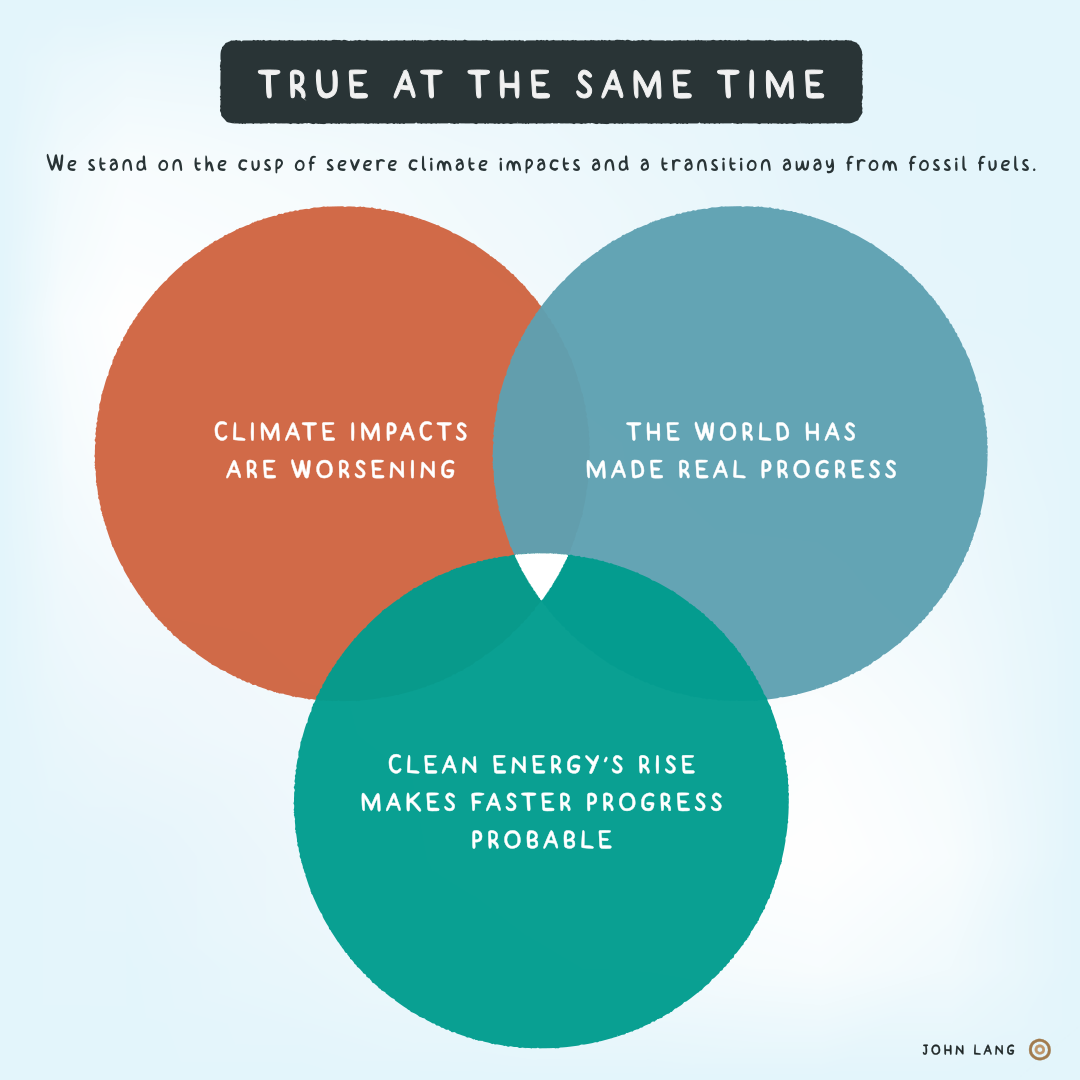
Three seemingly contradictory statements can be true at the same time.
We can sometimes fall into the trap of framing climate as a binary: catastrophe or complacency, despair or denial. Reality is messier. As Our World in Data founder Max Roser argues, understanding the world means holding multiple truths in your head at once. That’s as true for climate as it is for poverty and violence, where demonstrable progress coexists with immense suffering.
1. Climate impacts are worsening
Start with the bad. Global CO2 emissions continue to be stubbornly high, still north of 40 billion tonnes a year – nowhere near the IPCC’s recent conclusion that emissions should halve to around 20 billion tonnes by the early 2030s. Climate impacts are intensifying, risks are compounding and much of the remaining carbon budget for both 1.5°C and 2°C has been hungrily consumed. Meanwhile, political discourse is more hostile, polarised and is being constantly polluted with online misinformation.
2. The world has made real progress
The good news. Climate policy and the clean energy revolution have shifted the world's trajectory. The most extreme emissions scenarios once considered plausible are no longer so. The emissions curve has not yet turned downward. But it has bent. A brake has been applied to gobal emissions growth, most advanced economies are well past peak emissions and economic growth is decoupling from emissions across most of the world. China – by far the world's largest emitter – may have reached peak emissions. Meanwhile, there are signs India is leapfrogging straight to clean: the ‘electrotech fast-track’.
Investment in clean energy is now roughly double that flowing to fossil fuels. And the Iran crisis has reinforced the new energy calculus: nations would simply rather rely on homegrown sun and wind than fuel imports from unstable regions. Energy importers are investing massively in clean energy.
3. Clean energy's rise makes faster progress probable
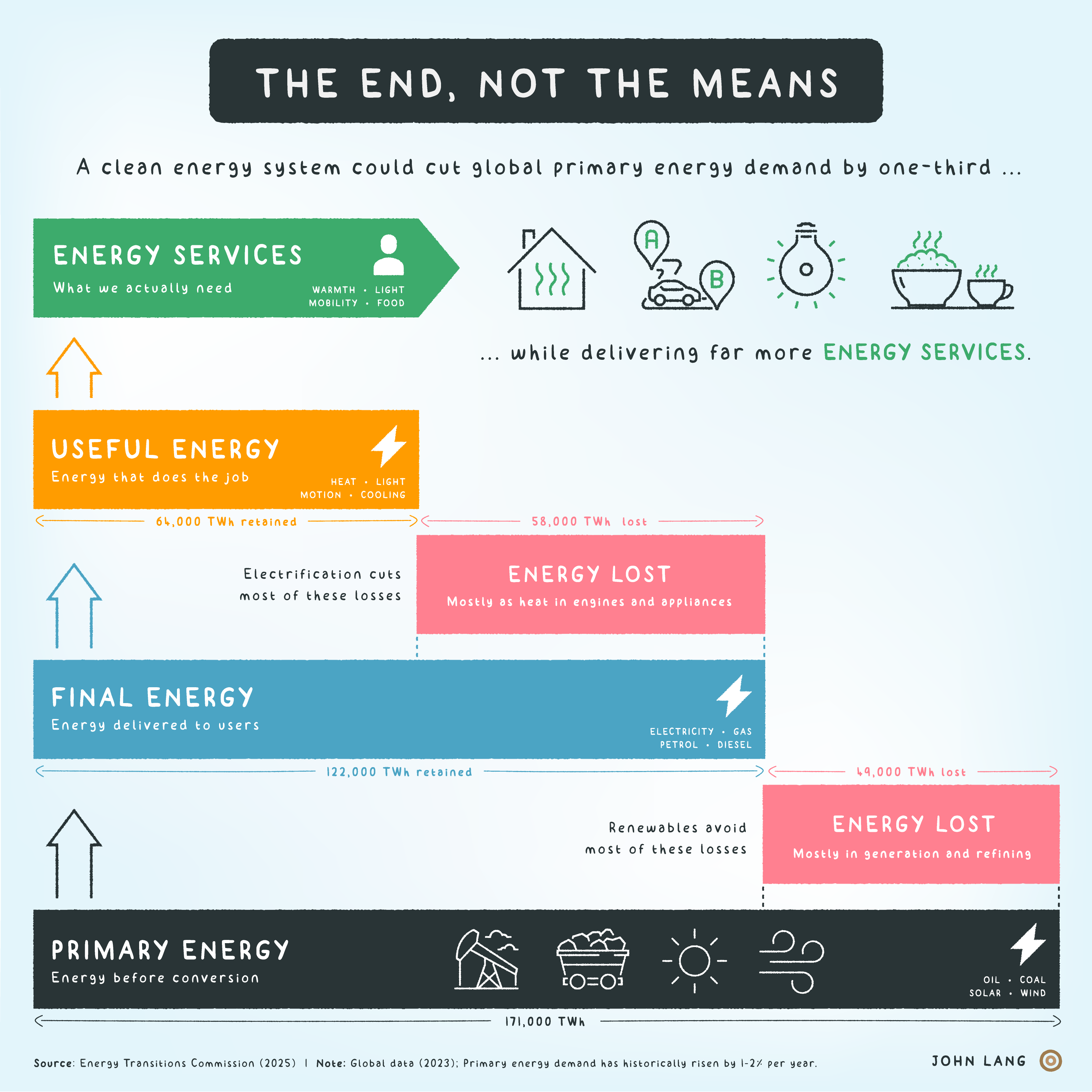
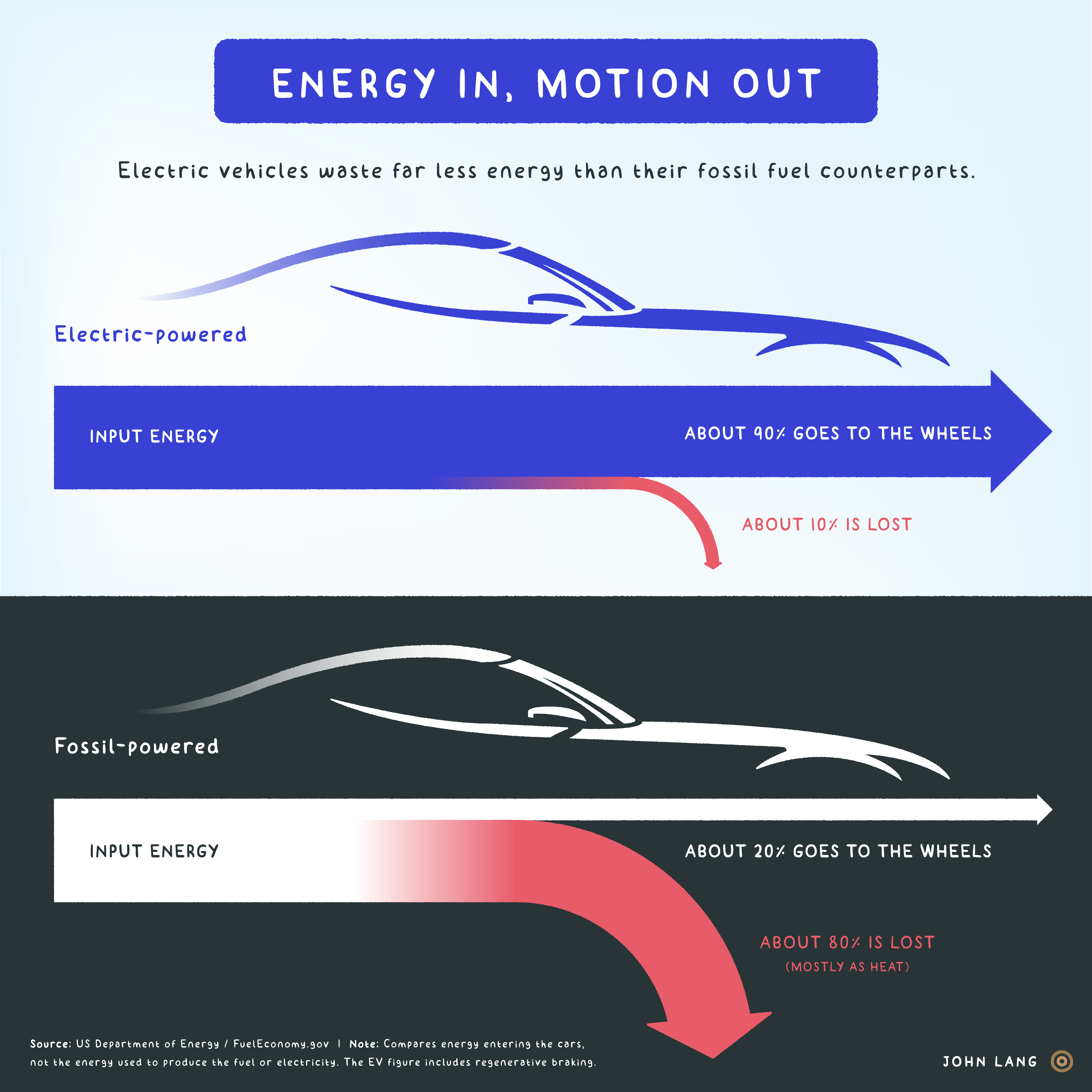
The future is impossible to predict, but the direction of travel is clear. Unlike fossil-based systems, which waste most of their energy as heat before reaching end users, renewables and electrification deliver the same energy services far more efficiently. Renewables now account for the overwhelming majority of new power capacity built worldwide and clean energy is keeping fossil generation flat. In April 2026, wind and solar generated more electricity than gas globally for the first month on record. Batteries are becoming cheap enough to shift solar generation into the evening peak, making clean electricity available when it is most needed. Wind and solar are the fastest-growing electricity sources in history and become cheaper as they scale.
No guarantees
A sustained decline in global emissions has proved elusive for years. For clean energy to displace fossil fuels, it has to outrun rising demand from data centres, air conditioning and economic growth. That means overtaking fossil fuels on a moving walkway.
That requires massive investment in grids, storage and transmission. In a hotter world, for example, demand for cooling can create its own feedback loop: more air conditioners drive more electricity demand.
If clean energy scales faster than energy demand, electrification accelerates and progress on deforestation improves, emissions will fall.
As author F. Scott Fitzgerald once put it, ‘The test of a first-rate intelligence is the ability to hold two opposed ideas in the mind at the same time, and still retain the ability to function.’