Aviation punches above the weight of its CO2 emissions.
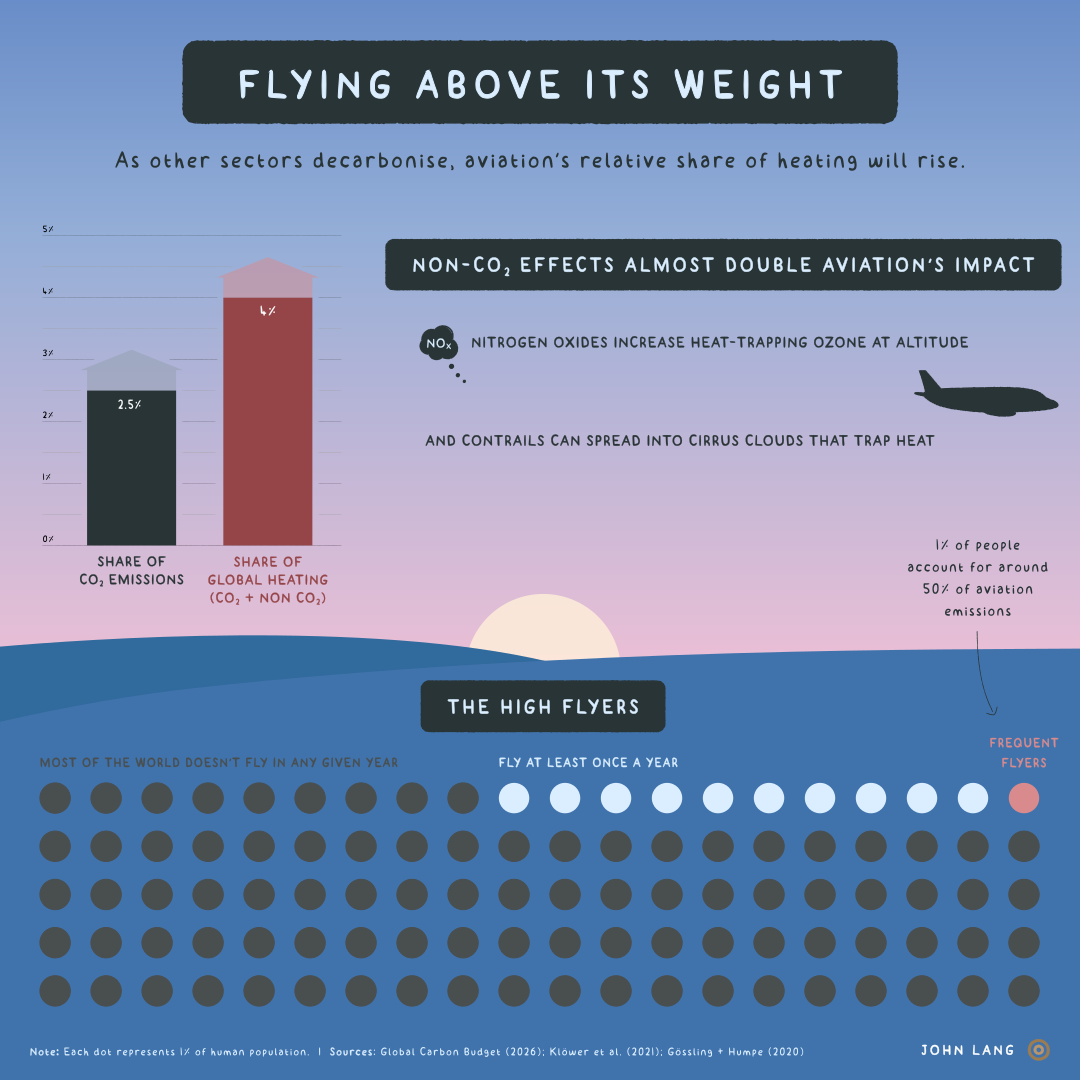
Flying accounts for around 2.5% of global CO2 emissions, but closer to 4% of global heating once other effects are included. As other sectors of the economy decarbonise, aviation’s relative share of heating will rise.
The world wants to fly more, not less. Before Covid aviation demand was predicted to triple by 2050. Recalibrated forecasts still expect passenger demand to more than double by 2050, with the fastest growth in emerging economies.
Hard to rein in
Long-haul aviation is stubbornly hard to decarbonise. Kerosene jet fuel packs a lot of energy into relatively little weight and volume, with the added bonus that the plane gets lighter as the fuel is burned.
Batteries do neither. They store far less energy per kilogram and ride as a deadweight passenger.
Still, electric flight is starting to take off. Small battery-electric aircraft are rising above us, while hybrid-electric designs are likely to make inroads into short-haul and regional aviation. The engineering challenge gets harder when crossing an ocean with 300 people. Hydrogen packs more energy per kilogram than batteries, but is costly and wickedly inefficient to produce cleanly. Its bulky tanks would also require different aircraft, including blended-wing designs with more room for fuel.
For longer journeys, the industry’s hopes are pinned on sustainable aviation fuels (SAFs). The global airline trade association, IATA, envisages SAF doing the heavy lifting on its net zero commitment, with support from new aircraft, operational improvements and carbon removals. The scale-up required is whopping – and not all SAFs are created equal.
The other half of the story
CO2 is only part of flying’s climate impact. Put fossil-fuel-burning machines up in the atmosphere and they change it in unhelpful ways. Water vapour and aerosols (tiny pollution particles) play a part. Nitrogen oxides increase heat-trapping ozone at altitude. And then there are contrails.
Most contrails vanish quickly. But under the right conditions they can stick around and spread into planet-heating cirrus clouds. Their ice crystals reflect some incoming sunlight, but also reduce the heat escaping to space. On a net basis, the heating wins. As The Economist puts it:
‘Wind [contrails] around Earth like yarn around a ball and you will find that, at any one time, persistent contrails cover maybe a thousandth of the sky. In doing so they warm the planet.’
Some of the heating from contrails may be readily avoidable. Research suggests that 80% of contrail warming comes from just 2% of flights. So, eliminating the vast bulk of it might simply require re-routing fewer than 5% of flights – and often by just a few hundred metres vertically.
Just announced, Operation Blue Skies will test whether planes can be routed around ice-supersaturated regions (ISSRs) at scale across Shanwick, 1.8m km2 over North Atlantic airspace. Despite Shanwick covering just 0.4% of Earth's surface, models suggest it may account for around 5% of global heating from contrails.
Rather than grounding planes, a chunk of aviation's climate impact could be avoided by flying some of them slightly differently.
The high flyers
Flying itself is an unevenly distributed luxury. The go-to research paper on flying numbers estimates that, in 2018, around 11% of the world's population flew and only 2–4% did so internationally. The most frequent-flying 1% made up over 50% of commercial passenger CO2 emissions. (Private jets and military planes add another 4% and 8%, respectively, to aviation's total CO2 emissions.)
The frequent flyer imbalance raises policy questions, but aviation needn't become a morality play on individuals. Planes connect cultures, families, businesses and economies. And for billions of people, flying for the first time is still something to look forward to.
The organising principle should be substitution, not sacrifice. Electrify where batteries make sense. Invest in developing genuinely low-carbon fuels where they don't. Deal with the hardest-to-eliminate CO2 by eventually counterbalancing it with durable carbon removals. And avoid the worst contrail-producing pockets.
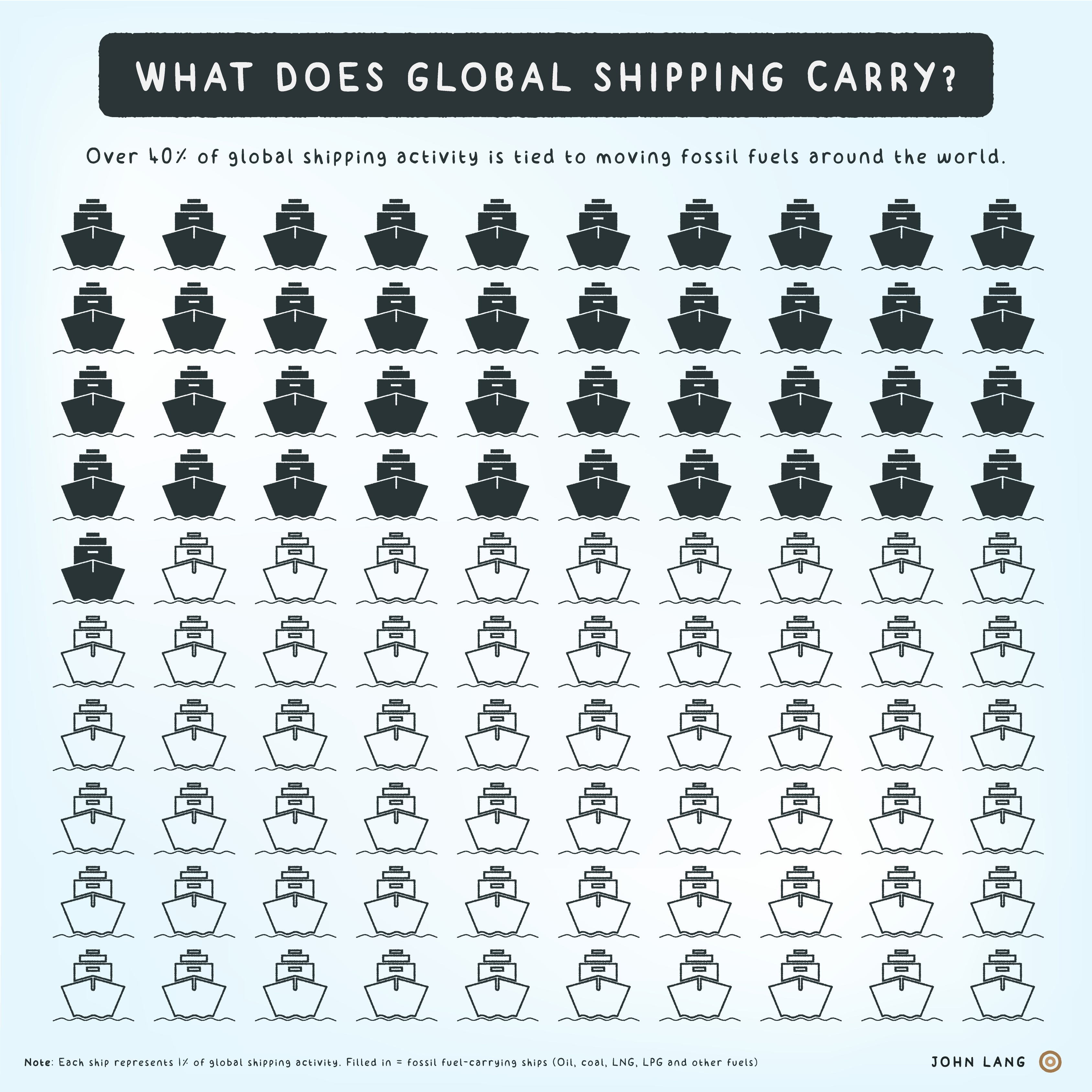
Like shipping, international aviation sits outside countries’ Paris Agreement targets. The UN’s aviation body, ICAO, has set a net zero goal for international aviation – but getting there relies on radically cleaner fuels and controversial carbon credits.
Aviation is hard to abate, not impossible. Operation Blue Skies captures the opportunity: preserve what people value while designing out the heating.