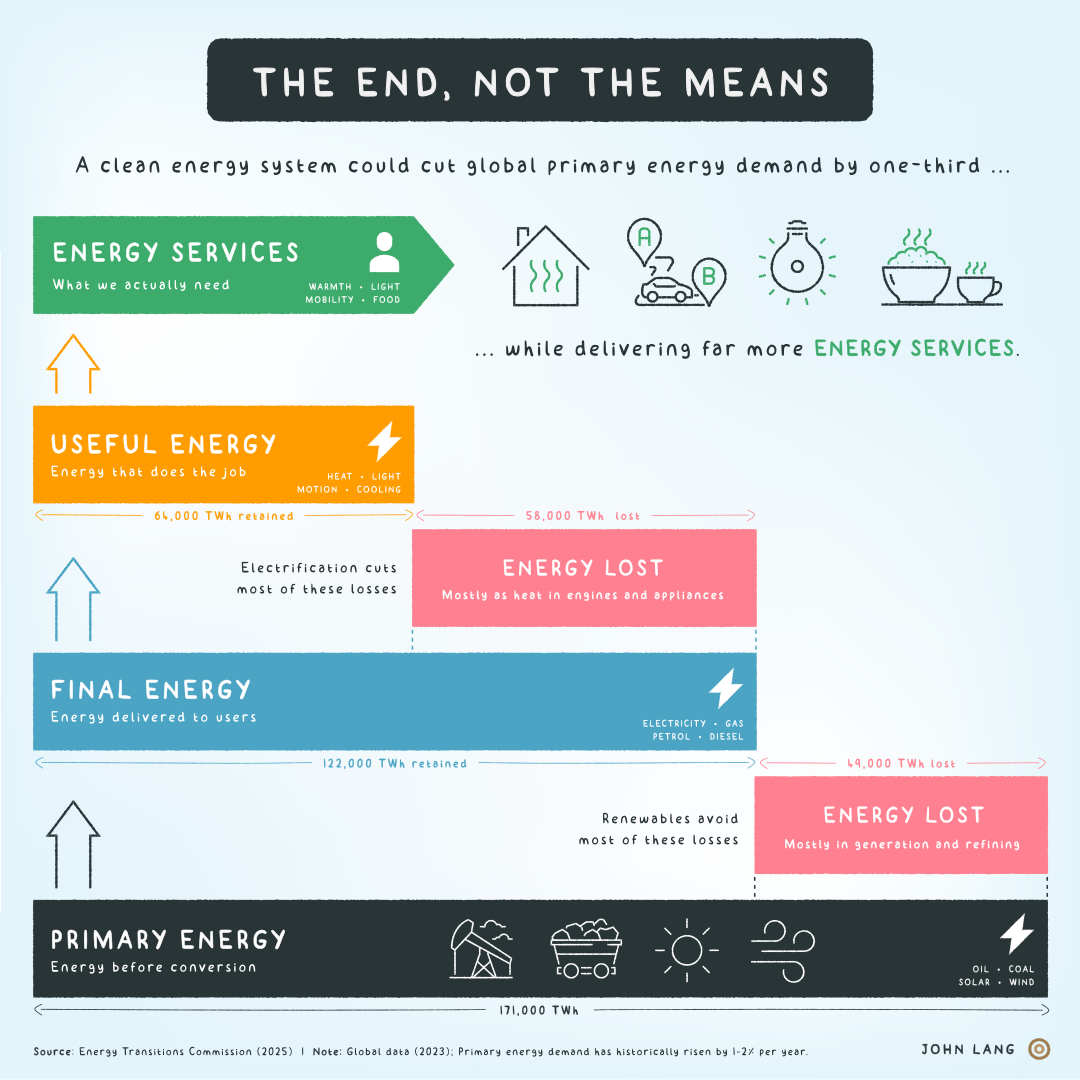
A clean, electrified energy system can deliver far more of what we need from far less energy.
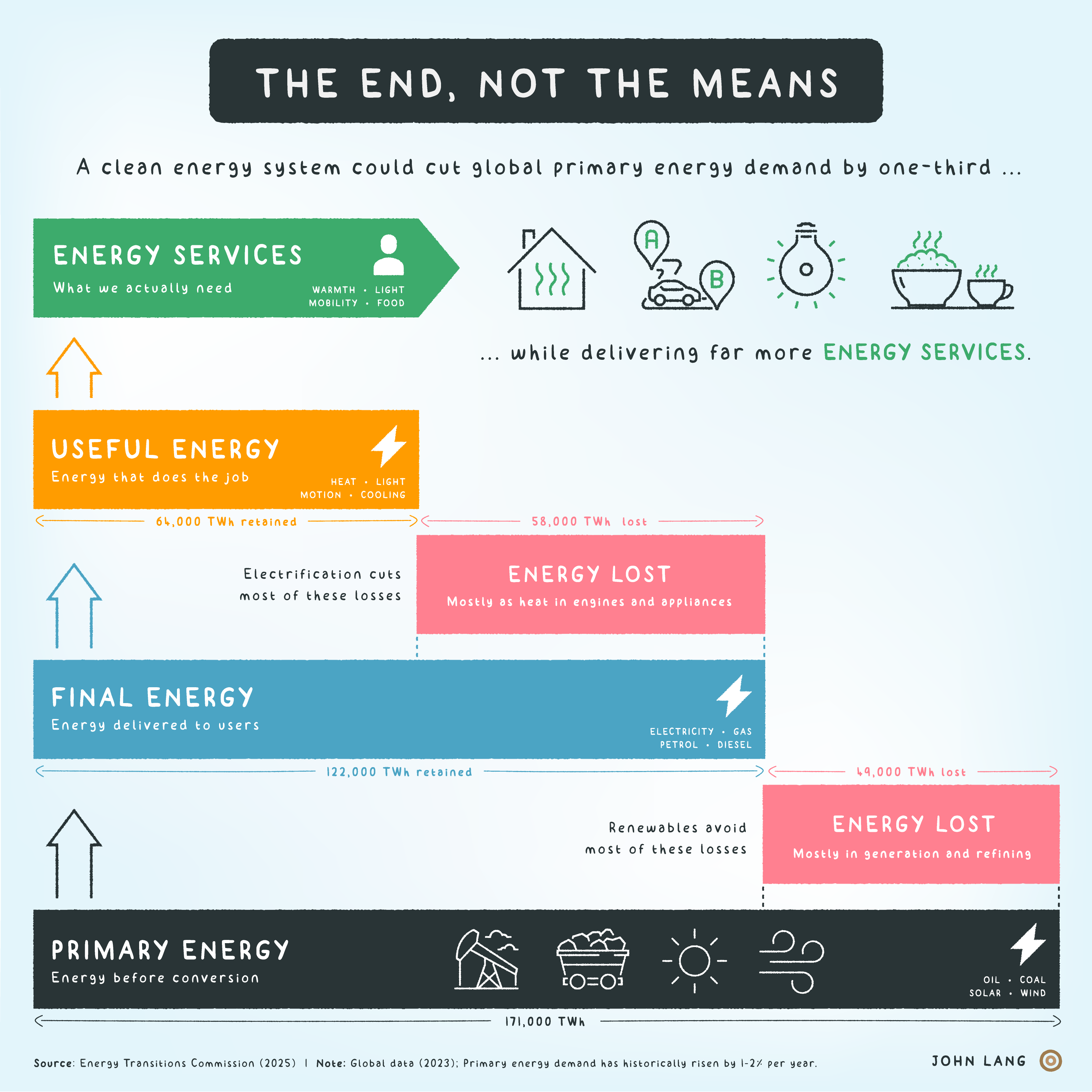
In 2023, the world used about 171,000 terawatt-hours (TWh) of primary energy. Around 80% came from coal, oil and gas.
Most of that energy never becomes useful. About 49,000 TWh is lost before energy even reaches users, mostly as heat in power generation and refining. And another 58,000 TWh is lost at the point of use, mostly in engines and appliances. Only about 64,000 TWh ended up as useful energy. That's more than 100,000 TWh lost along the way.
Energy services without the waste
Warm homes, light, mobility, hot meals, cold beers, an internet connection, a charged phone, functioning hospitals... You get the picture. Energy services are the end. Primary energy is merely a means to deliver them. As energy veteran Michael Liebreich puts it:
‘The transition is not about replacing all of Primary Energy Demand with something cleaner, it just needs to deliver energy services, a vastly smaller quantum, in a clean way.’
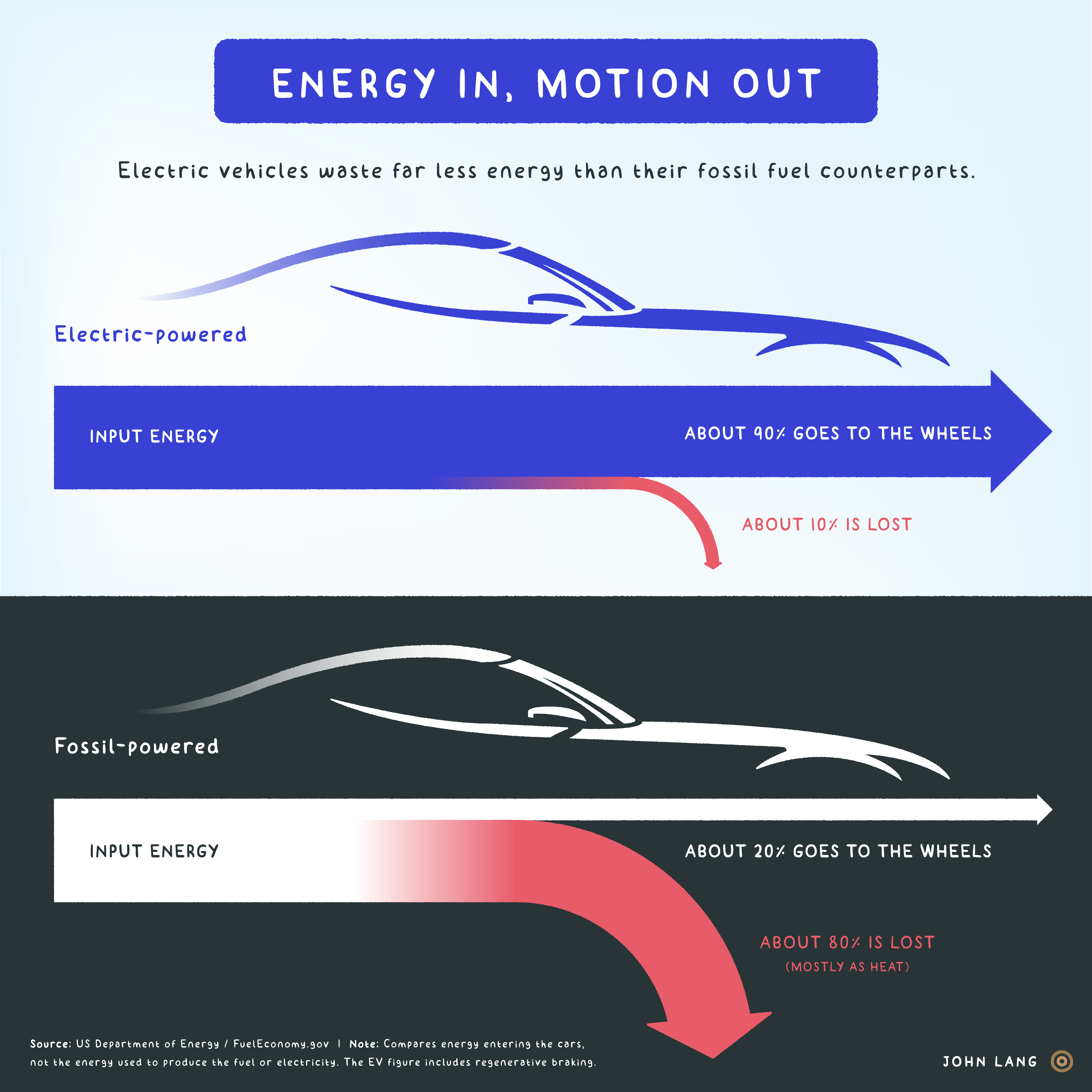
As the Energy In, Motion Out visual highlights, switching from a petrol car to an equivalent EV can cut primary energy demand by around 75%, while delivering the same mobility. Likewise, a heat pump powered by clean electricity can cut primary energy demand for heating by almost 80% with no loss in human comfort.
Electrification simply improves the arithmetic, shrinking the amount of energy we need. Solar and wind avoid the large thermal losses of fossil-fuelled power stations, while electric motors, induction hobs and LEDs waste far less energy than the technologies they typically replace.
Powered by ‘electroefficiency’
The Energy Transitions Commission (ETC) estimates that by 2050 the world could double GDP while reducing energy demand by a quarter. It sounds too good to be true. But that’s the power of what Oxford professor Jan Rosenow calls 'electroefficiency'.
And that’s despite a future economy demanding more from the energy system. By 2050, kilometres travelled by car could rise by 70%; air travel and cooled floor area by 150%; heated floor area by 25% – and demand for petrochemicals, cement and steel is not about to go into reverse any time soon. The ETC finds that a clean, electrified system could deliver all those extra energy services using 24% less final energy and 36% less primary energy than today.
A clean energy system means less other stuff too
A system that needs less energy to provide the same services also needs less infrastructure to produce and distribute it. The one big exception is electricity grids, which will need to expand massively as electrification speeds up. The IEA thinks that meeting electricity demand through 2030 will require annual grid investment to increase by about 50%.
But elsewhere, less fossil fuel use will mean less infrastructure. Take international shipping: over 40% of the world's ships are used solely to transport fossil fuels. In aggregate, the ETC estimates that greater energy productivity could cut the investment needed for a zero-carbon economy by $600 billion a year, while at the same time reducing requirements for land, water and materials.
Greater energy productivity would also bring dividends for energy security, particularly for those nations dependent on, and exposed to, imported fossil fuels.
By removing vast amounts of waste, electrification can make the future energy system smaller, cheaper and more productive. The energy transition is ultimately about wasting less of the means to get more of the end.