Find your climate shadow. It stretches further than you think.
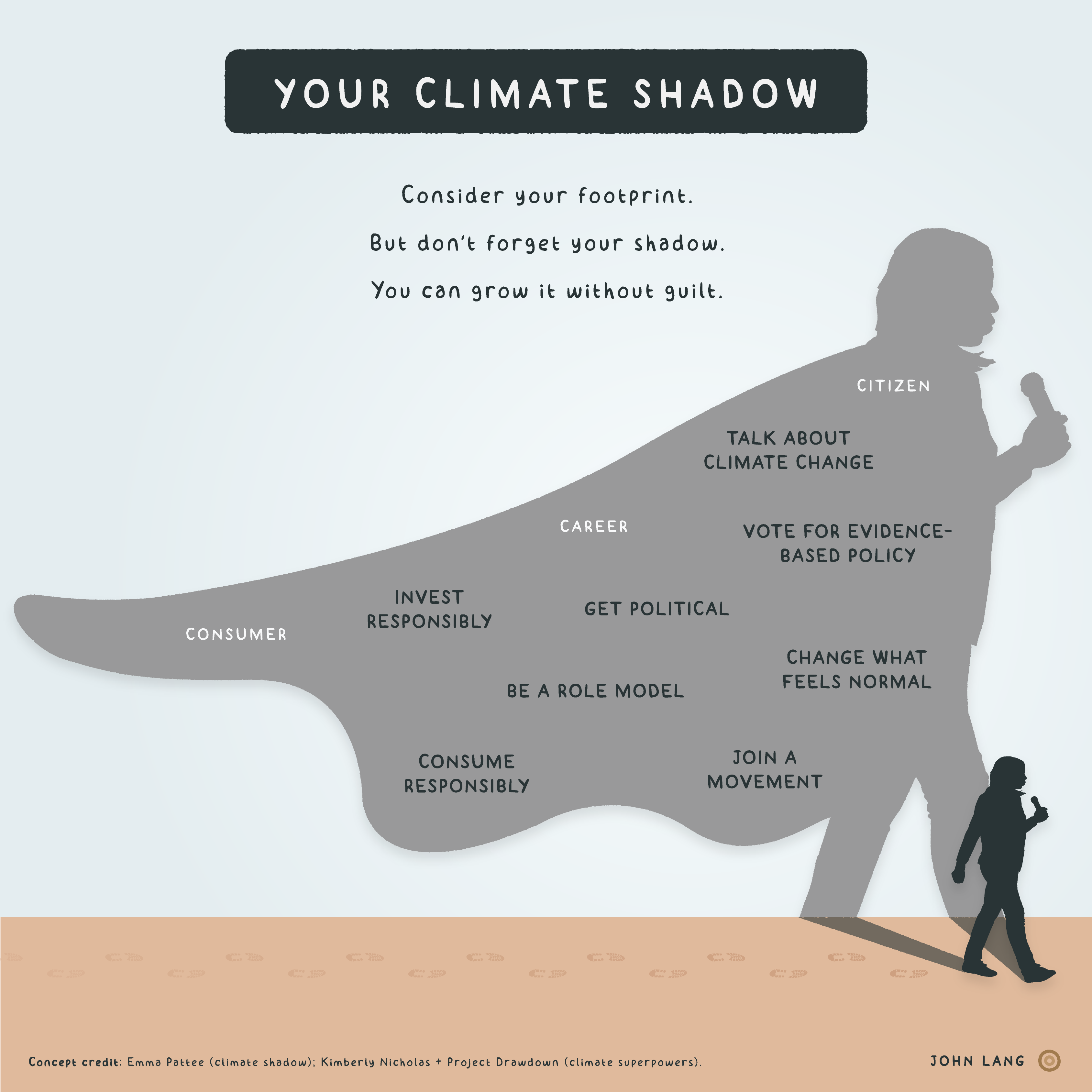
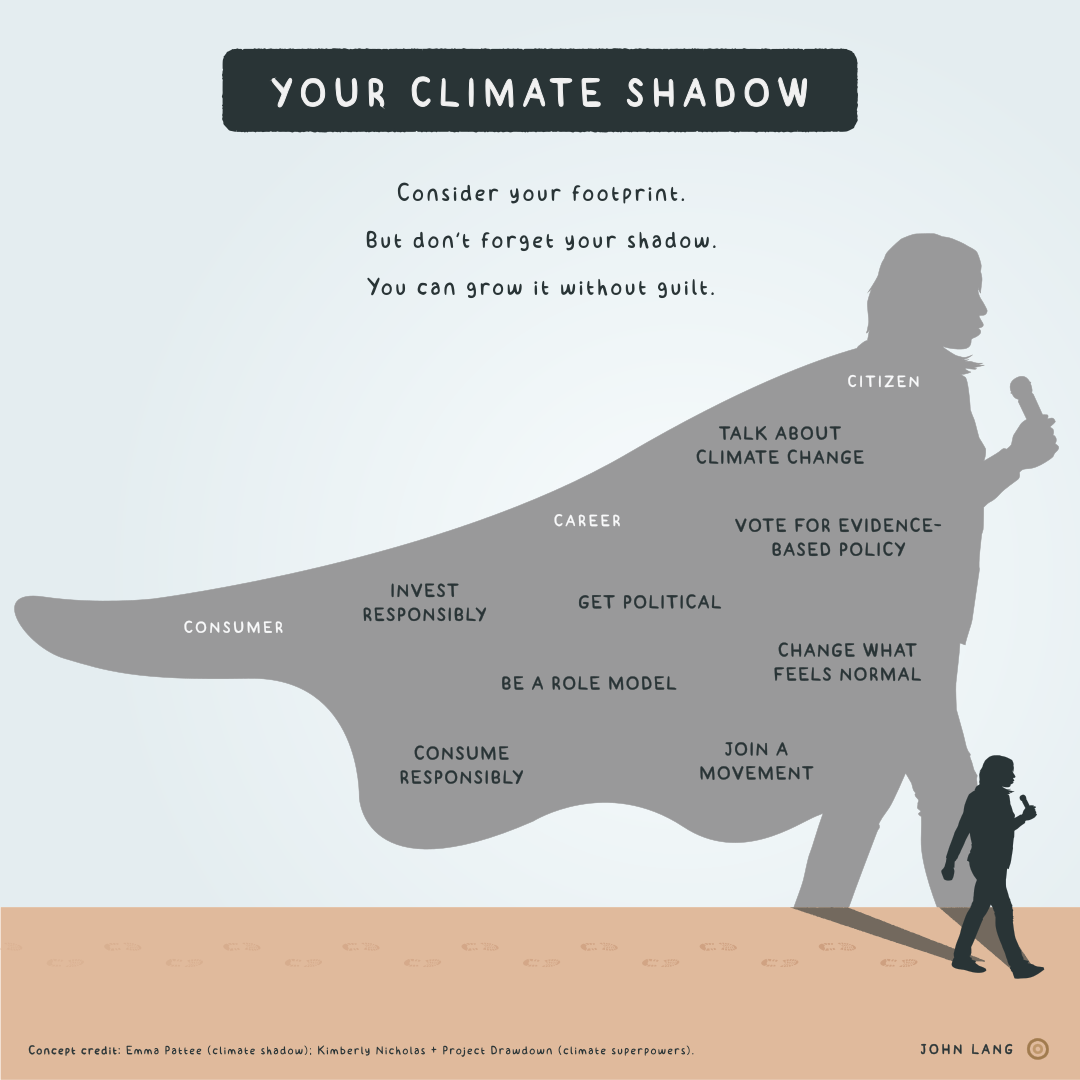
Writer Emma Pattee first coined the term 'climate shadow' to describe influence beyond what you emit. It includes who you vote for, where you work, how you invest, what behaviour you normalise and how often you make climate action visible in everyday life.
Our climate shadows include those ‘contagious behaviours’ that spread from person to person and change what feels normal. Installing solar panels or simply talking about climate can nudge others to follow suit.
As consumers, we make choices about what we buy, use and eat. Through our careers, we influence how organisations operate, where money is invested and what gets prioritised. And as citizens, we can vote, speak up, join organisations and help move the Overton Window – the boundaries of what is politically possible. Where we focus our attention, what we talk about and what we make normal all influence others.
Overshadowing footprints
There's a reason Pattee urges us to look beyond our footprints. In the early 2000s, oil giant BP hired a PR firm to popularise the carbon footprint, launching a calculator in 2004 that put the spotlight on personal responsibility rather than corporate accountability and government policy. As Pattee argues, focusing on our footprints diverts attention from ‘what truly matters: collective action’.
And the cape?
This Trunk visual merges two metaphors: your climate shadow and the five climate superpowers developed by climate scientist Kimberly Nicholas and Project Drawdown. Their SHIFT initiative identifies five evidence-based ways to exercise our influence: as a citizen, professional, investor, consumer and role model. That might mean cycling to work, contacting your political representatives, moving your money out of fossil fuels or speaking up at the dinner table.
Social change spreads through people: through stories, social norms and everyday conversations. Yet we tend to underestimate just how many people are on our side. A global study of nearly 130,000 people across 125 countries found that people systematically underestimate others' willingness to act on climate change. Separate research found that correcting this ‘pluralistic ignorance’ can make concerned people more willing to speak up.
The long shadow of talking
Climate scientist Katharine Hayhoe says the most important thing you can do about climate change is to talk about it. Not to win an argument or recite the science, but to connect it to what people already care about – for example: health, security, fairness, the cost of living, legacy, future generations, nature, sport or community. Talking about climate can make it feel less taboo and climate action more politically possible. Silence, meanwhile, gives misinformation and delayism a free run. As the old saying goes, a lie can travel halfway around the world before the truth has got its pants on.
Importantly, some shadows stretch further than others: those with bigger platforms, resources or status often have far more influence than they realise. But influence doesn't always require a big platform. Rosa Parks helped catalyse a civil rights movement by refusing to give up her bus seat. A study of nearly 3,000 people found that social media influencers' messages can strengthen followers' belief in collective action and their willingness to get politically involved.
Climate change won't be solved by the individual decisions of eight billion people. It will be solved by influencing the decisions of a few thousand people.
Those few thousand include heads of state, ministers, leaders of global institutions, mayors and CEOs of the world's largest firms. Their decisions don't get made in a vacuum. They're influenced by the politics of the day – and by the votes, voices, demands and everyday actions of billions of others.
Making waves with shadows
Professor Leah Stokes offers up yet another metaphor in The Carbon Wave: instead of making ourselves smaller by shrinking our footprints, we can join forces to make our collective impact bigger. Her Carbon Wave Calculator shows how buying an EV or installing a heat pump can help build momentum for wider policy change. (Not quite sure how shadows become waves metaphorically, but you get the drift.)
We are part of teams, families, workplaces and communities. We influence and are influenced, persuade and are persuaded.
We all leave footprints. We all cast shadows, too.
Note: A hat tip to Phoebe Quinn and Katitza Marinkovic Chavez at the University of Melbourne, too. Their own Climate Superpowers project predates SHIFT and was co-designed with academic experts and young Australians in 2022.