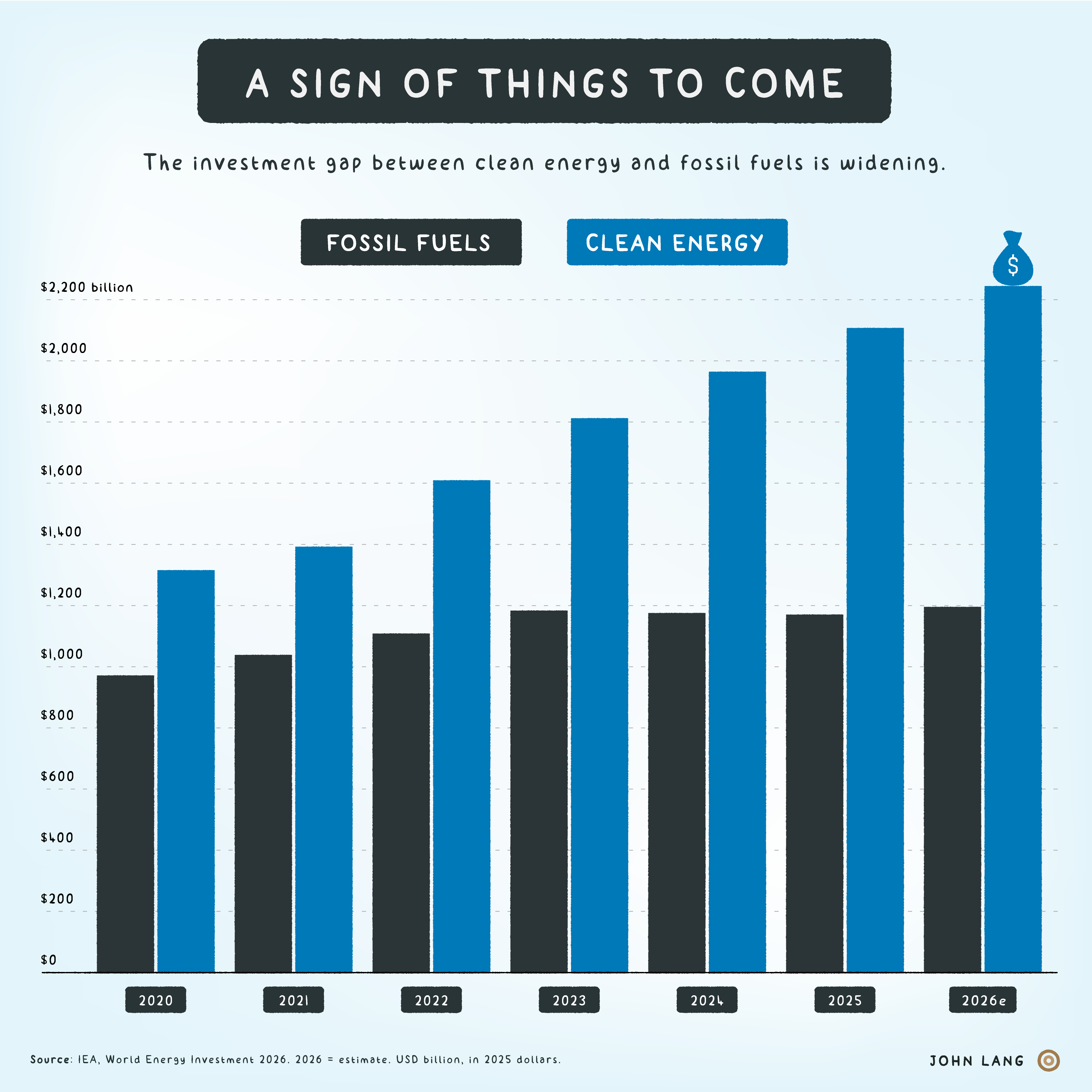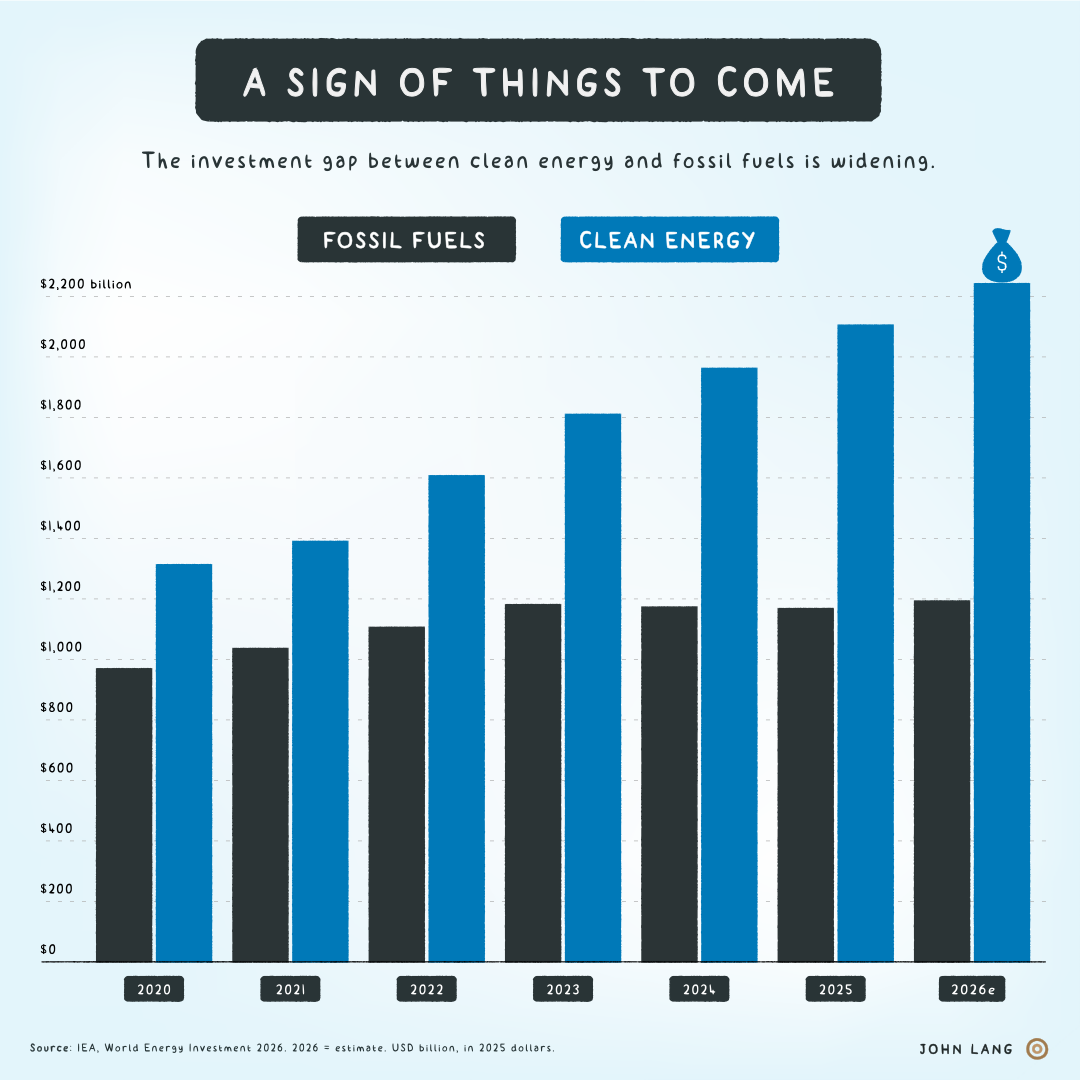
Clean energy investment has risen more than 70% since 2020, while fossil fuel investment has hovered around $1.2 trillion since 2023.
Follow the money and you get a pretty good sense of where the global energy system is heading. Clean energy investment first overtook fossil fuels in 2016. The gap has been growing wider since.
The International Energy Agency (IEA) expects $3.4 trillion to be invested in energy in 2026. More than $2.2 trillion of that will go into clean energy, compared with about $1.2 trillion for oil, gas and coal. That's nearly $2 into clean energy for every $1 into fossil fuels.
Fossil fuel investment is still in the trillions, but its dominance has eroded. Amid what the IEA calls ‘the largest energy security threat in history’, capital is favouring clean tech. Part of that is the new energy calculus for governments. Oil and gas companies are also keeping a tighter grip on spending. Even with the latest oil-price windfall – it was big – many have prioritised paying down debt and rewarding shareholders over expanding production. Despite higher oil prices, the IEA expects oil investment to fall for a third consecutive year in 2026.
But capital discipline is only part of the story. Oil and gas fields deplete and require continual reinvestment; manufactured tech gets cheaper as production scales. Clean energy also buys a degree of energy independence. The IEA estimates that investments in renewables, nuclear, efficiency and electrification over the past decade saved major energy-importing regions around $260 billion in fossil-fuel import costs in 2025 alone.
More than wind and solar
An important takeaway: the IEA's definition of ‘clean energy’ extends further than just wind and solar. It includes the less visible infrastructure – grids, batteries and other forms of storage – that helps make electrification work. It also includes nuclear power, low-emission fuels and energy efficiency. Electricity-related spending now makes up nearly 60% of global energy investment.
We’re going to need the electrons. The IEA expects global electricity demand to grow 3.6% a year through 2030 – about 50% faster than over the previous decade – as EVs, air conditioning, data centres and industry usher in what it calls the ‘Age of Electricity’. By 2030, electricity consumption is projected to be growing at least 2.5 times as fast as overall energy demand, with renewables and nuclear power supplying about half of global electricity.
More watts for your buck
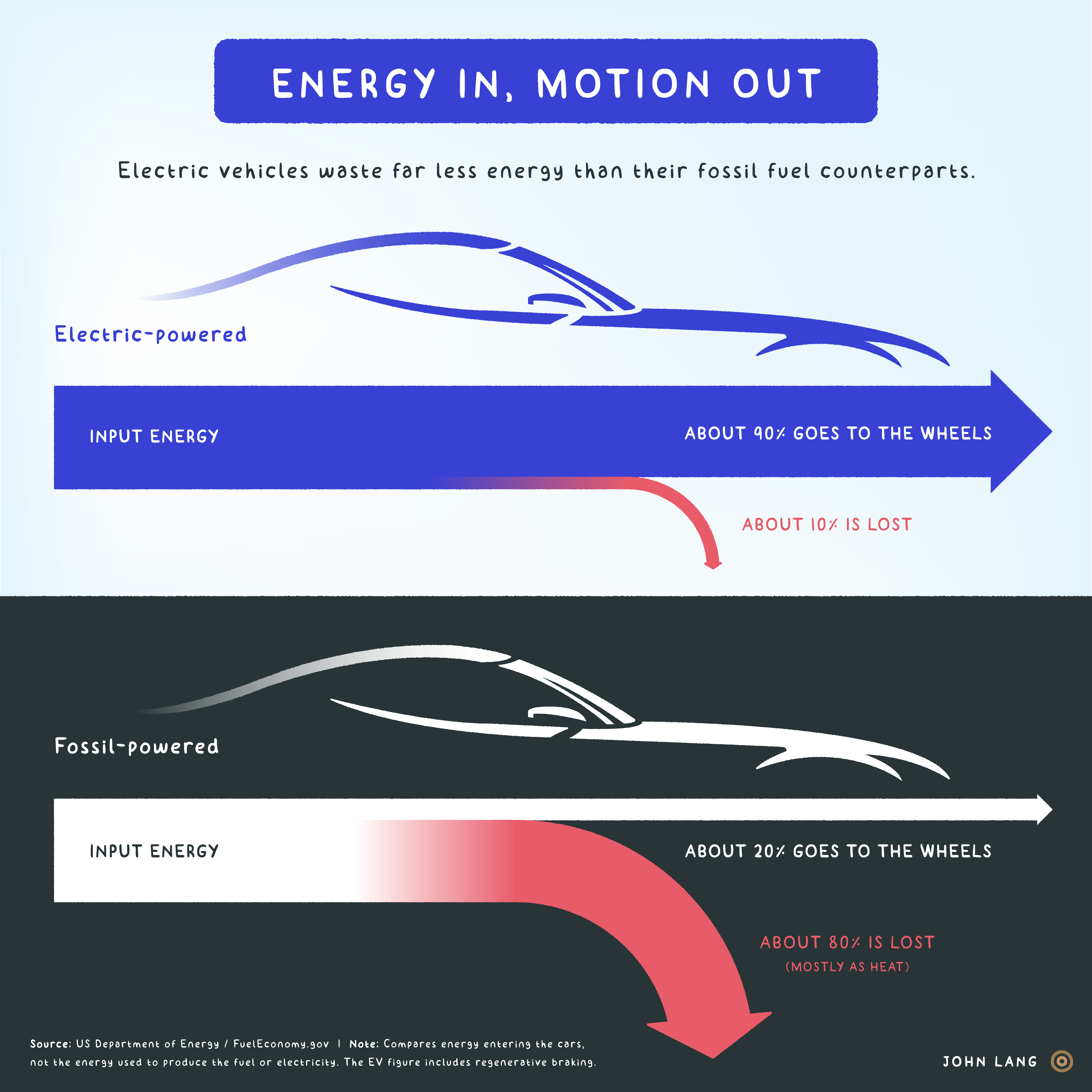
If anything, the investment gap understates the physical shift. A dollar invested in clean energy today goes much further than it did a decade ago. The same scaling forces are at work across 'electrotech': since 1990, the combined cost of chips, batteries, power electronics, motors and sensors has fallen by 99%.
A barrel of oil has to be extracted every time you need another one. By contrast, solar panels are manufactured – and, like computer chips, the more we make, the better we get at making them and the cheaper they become. Innovation, learning curves and economies of scale have cut the costs of solar PV, batteries and EVs by around 80% over the past decade. Without those cost reductions, the IEA estimates that delivering the same additions in 2026 would cost nearly twice as much. Around $1 billion is now being invested in solar every day. And the average investment needed to add 1 GW has fallen from around $3 billion in 2015 to $0.7 billion today.
Like investing in your kids, investing in clean energy is a bet on creating a better future, not a crystal ball. The truth is that more than $1 trillion is still going into fossil-fuel supply each year, with substantial investment still flowing into gas and coal even as oil investment falls. Nor is this a level playing field: the IMF estimates governments still provided $725 billion in explicit fossil-fuel subsidies in 2024.
The direction of travel is clear, though the destination is not guaranteed. Getting on the road to net zero means clean energy doing two jobs at the same time: meeting growing energy demand and turning down the fossil-fuel tap by displacing what is already in the system.
The investment gap needs to grow much further. It keeps widening. How quickly it widens from here will depend on governments embracing the new energy calculus: clean energy can save billions and strengthen resilience.