Within a single lifetime, temperature outcomes will branch out according to the choices societies make over the next decade or so.
Human civilisation has existed for only a few thousand years. For most of that time, the climate has been remarkably stable. Global temperatures have varied by just a few tenths of a degree, providing the narrow window in which agriculture, cities and complex societies could develop in different parts of the world.
But that stability is now being disrupted at warp speed – even if, for many, it still registers as only a whisper in their lived experience.
‘Human-induced climate change, including more frequent and intense extreme events, has caused widespread adverse impacts and related losses and damages to nature and people.’ — IPCC 2022
Over the past century, the planet has heated by more than 1.3°C – an unfathomably rapid shift in geological terms. But it’s not just the magnitude of heating that makes this a geological outlier; it’s the rate of change. At around 0.3°C per decade, we are changing the climate far faster than human systems, and natural ones, have evolved to cope with.
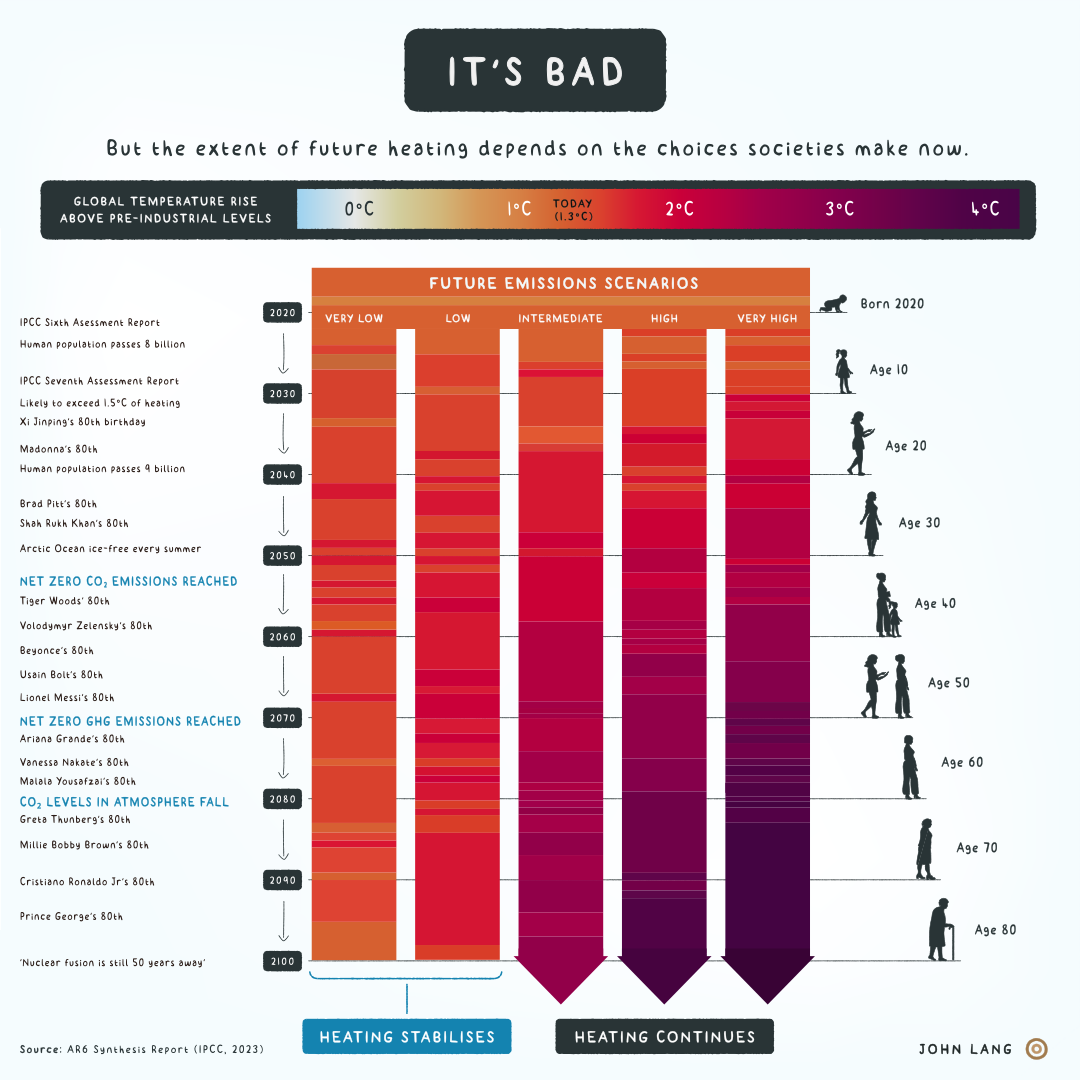
The above graphic shows how the future branches in different directions depending on the choices societies make in the decision window of the next decade:
- Under low emission scenarios, temperatures stabilise between 1.5 and 2°C.
- Under higher emission pathways, heating continues right through this century, reaching levels of 3°C or more, beyond the envelope of anything human civilisation has ever experienced.
Why does this matter?
Because nearly every system we rely on – food, water, infrastructure, ecosystems, politics and multilateralism – is calibrated to the relatively stable climate of the past. Human-caused climate change introduces instability into those systems: a threat multiplier that doesn't just intensify heatwaves, floods, droughts and wildfires, but also puts pressure on food systems, water resources and migration.
It also raises the risk of compounding 'double whammy' events and cascading 'domino effects' across economies and societies. Human systems can adapt, absolutely, but beyond a point, they risk breaking.
‘Risks and projected adverse impacts and related losses and damages from climate change escalate with every increment of global warming.' — IPCC 2023
Within a single lifetime, the future will branch out like a tree, shaped by the investment, energy and policy choices governments make over the coming decade. The world has made huge progress on the transition over the last decade, but as environmentalist and author Bill McKibben once wrote, when it comes to climate change, winning slowly can be the same as losing.
The good news is that we know how to stop global heating. And we have the tools to do it.