EVs are hopelessly efficient mobility machines.
Like heat pumps, which are roughly three times more efficient than gas heating systems, electric vehicles (EVs) are around three times as efficient as fossil-fuelled engines.
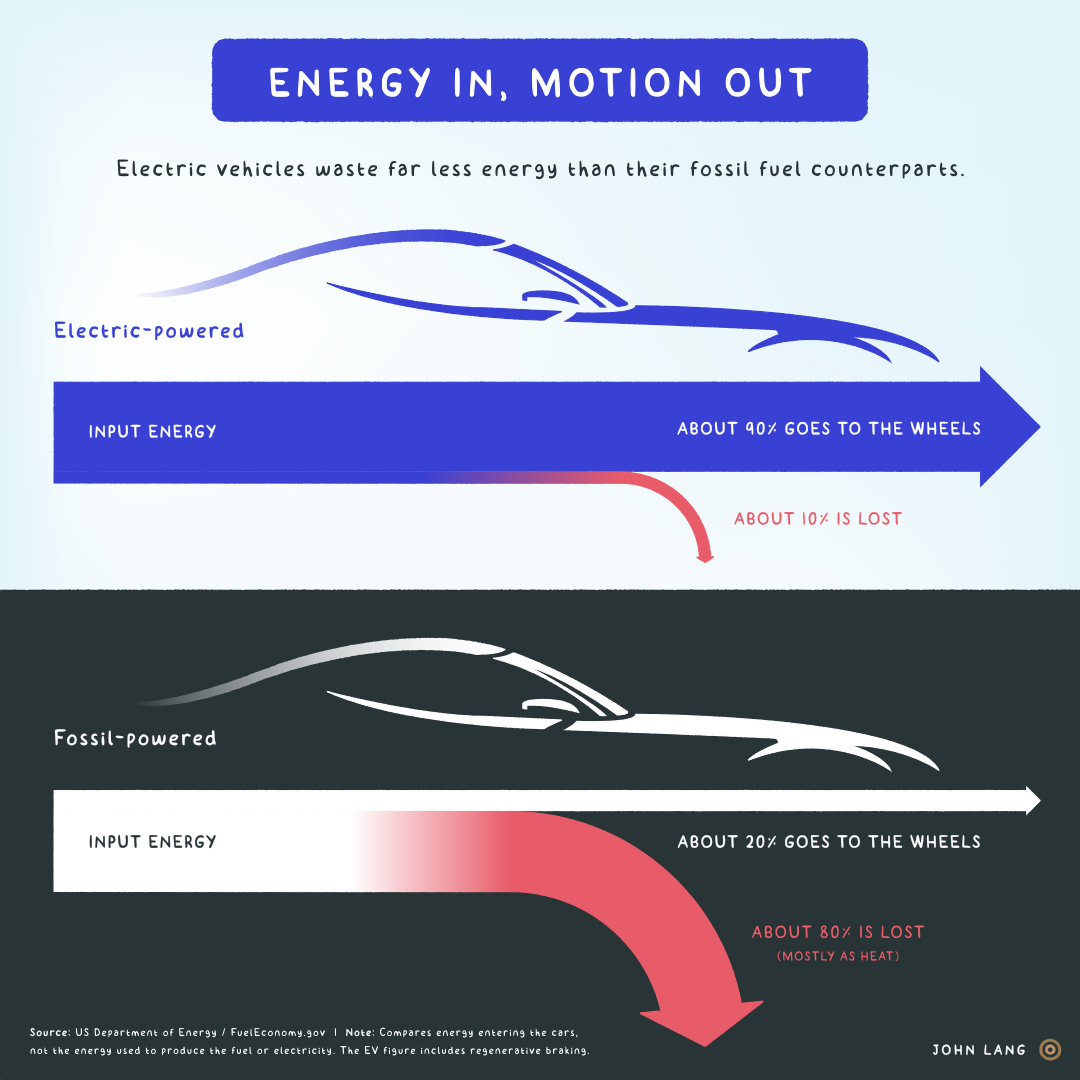
Put 100 units of energy into a petrol or diesel car and between 16 and 25 make it to the wheels. The bulk of the rest is lost as heat. By contrast, put 100 units of electricity into an EV with regenerative braking and between 87 and 91 of them make it to the wheels.
In both cases, the input is what energy wonks call final energy; what actually gets used is, well, useful energy.
- Final energy is the energy delivered to the end user, so petrol in the tank or electricity in the EV.
- Useful energy is the energy that actually does the job – in this case, getting you from A to B.
Fill a petrol tank and all of its energy content is counted as final energy. That's despite the engine turning only a fraction of it into actual motion.
By contrast, electricity powers a motor directly, rather than relying on combustion to convert chemical energy into mechanical work. EVs can therefore travel much further on the same amount of final energy.
The fast and the furious, EV style
EVs are starting to win on scale, compete on cost and even make inroads culturally.
Across a growing number of big car markets, petrol and diesel are already a minority of new car sales. In Norway, EVs are 99% of new sales; Nepal, Iceland and China are all over 50%. The direction of travel is undeniable.
With energy security adding to the calculus, China is moving at a particularly furious pace – and not just on cars: e-trucks there have gone from almost zero in 2021 to 30% of truck sales. In the UK, more EVs were sold over a 12-month period than petrol cars for the first time – and electric models recently filled every spot in Auto Trader’s top ten fastest-selling used cars.
As Energy Transitions Commission chair Adair Turner puts it:
‘The internal combustion engine is a dead man walking. We just haven't buried him yet.’
The engineering battle may have been won by electric drivetrains. But how long it will take to fully replace a century of global fossil-fuel infrastructure and culture is less certain.
Wait, where’s the boundary?
Important caveats. The graphic compares what happens inside the car: so, ‘tank-to-wheel’ for the fossil-fuelled car, and ‘battery-to-wheel’ for the EV. The precise numbers vary with driving conditions: EVs, for instance, benefit from regenerative braking in stop-start driving, while fossil-fuelled engines typically perform better on the open road.
This is not a ‘well-to-wheel’ or primary-energy comparison. Go upstream and the calculation has to change depending on a bunch of local and engineering variables. Producing and refining oil uses energy; generating and transmitting electricity uses energy. EV charging losses would also have to be tallied.
The electricity mix matters too: an EV running on coal-heavy Polish electricity has a larger climate footprint than one running on mostly French nuclear or mostly UK wind. As Carbon Brief shows, EVs still slash emissions compared with fossil-fuelled cars, even if run mainly on coal- or gas-fired power.
Electrons win, however you cut it
EVs win on CO2 emissions, tailpipe pollution and maintenance. They're also beginning to win on cost. UK EV drivers are already saving more than £1,100 a year on fuel compared with petrol-car drivers. Purchase prices are heading the same way.
As above, EVs are miles more efficient too – even when you account for the wider energy system.